The Patient
She came to me in her twenties with debilitating headaches, severe neck and shoulder pain, and a range of systemic irregularities — including abnormal and irregular menstrual cycles. At first glance, these seem like unrelated problems. They weren't. They were one structural problem expressing itself through multiple systems.
What the X-Ray Revealed
Lateral cervical X-ray showed a dramatically abnormal curve: 122 degrees — against an ideal of 45 degrees. The structural integrity of her cervical spine had been severely compromised, with the primary subluxation pattern concentrated at C5, C6, and C7. Those vertebrae weren't just misaligned. They were compressing nerve roots and creating interference throughout the nervous system far beyond the neck itself.
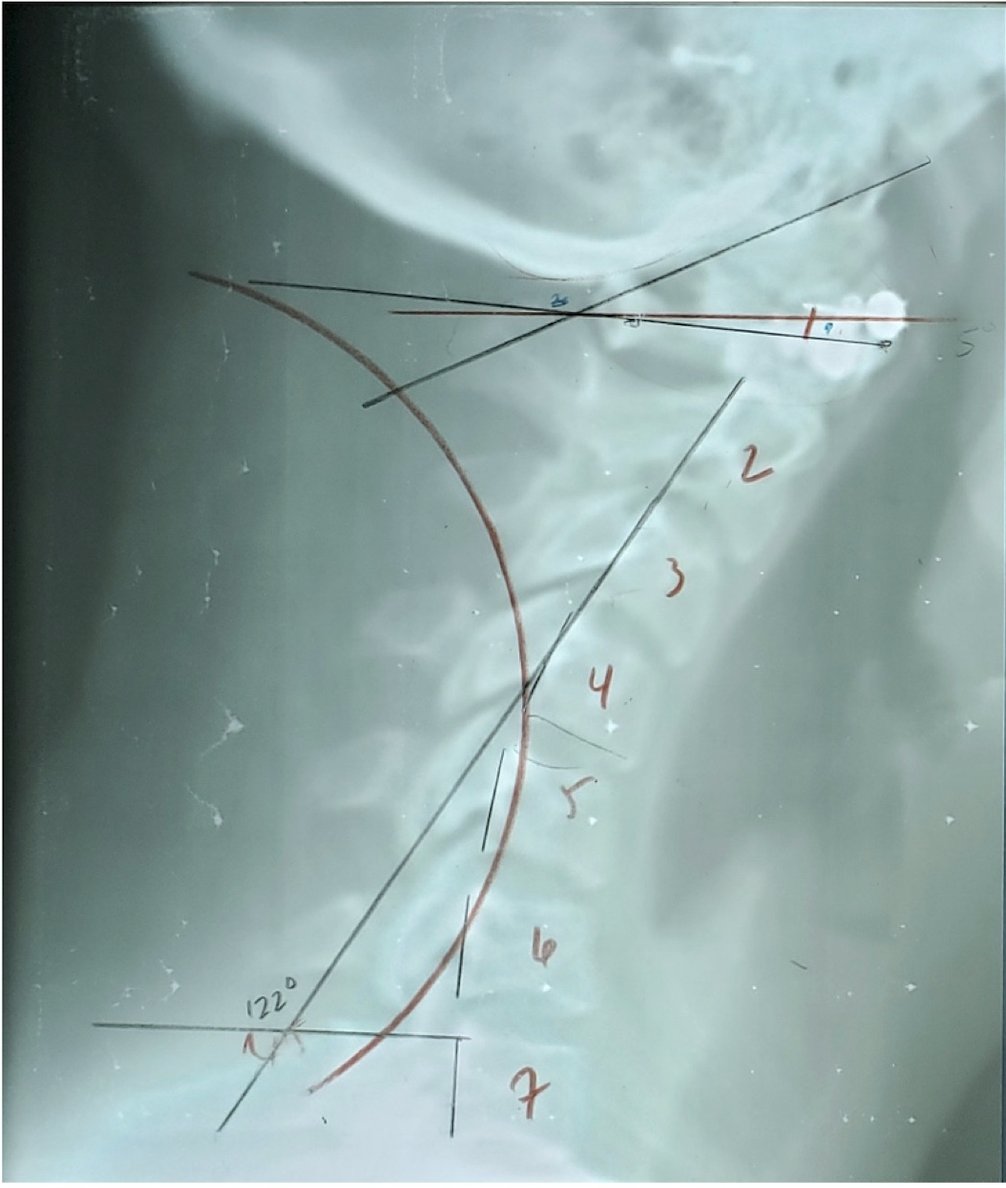
122° curve
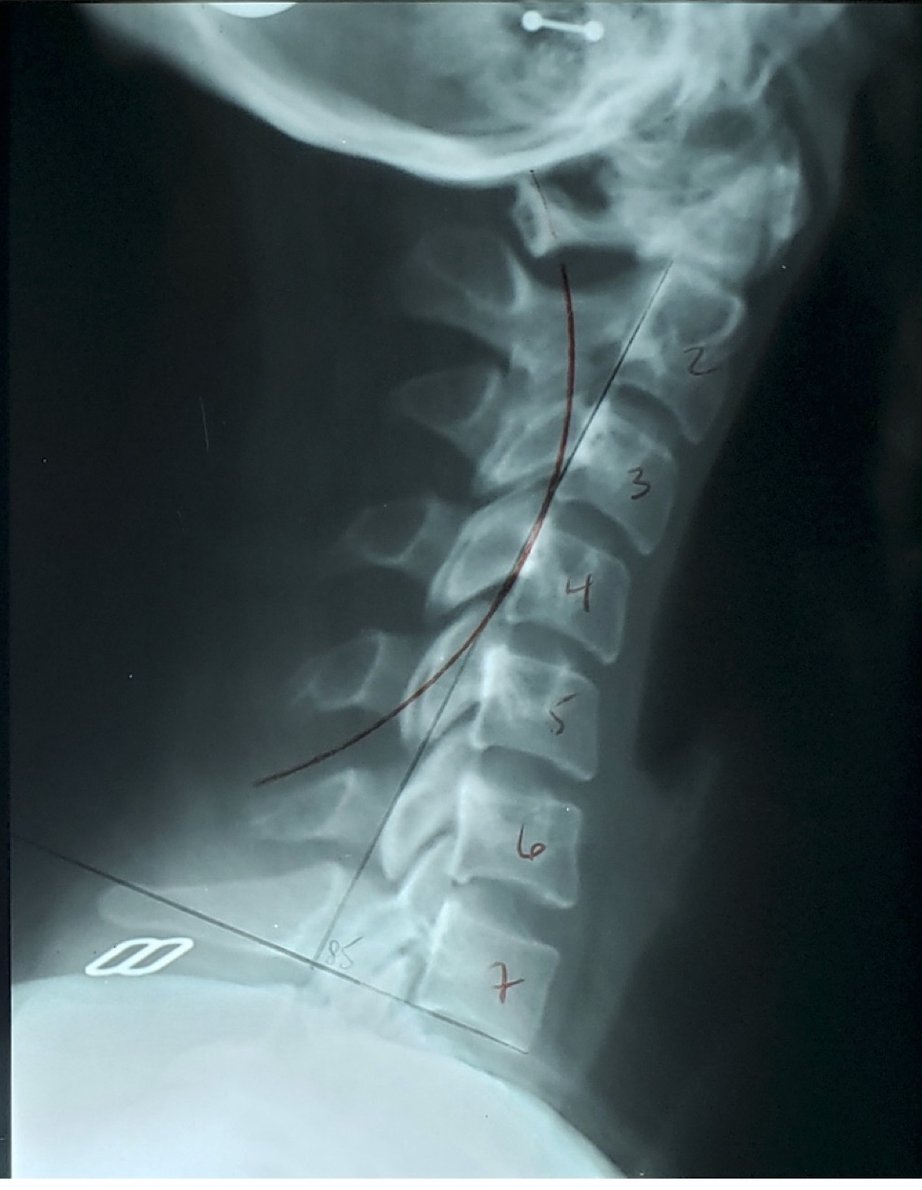
85° curve
Structural Findings — Initial Examination
Cervical curve (lateral): 122° — severely abnormal. Ideal: 45°.
Primary subluxation: C5, C6, C7 — nerve root compression, systemic nervous system interference.
The Upper Cervical Connection: Atlas, the Vagus Nerve, and Systemic Function
Before we get to C5, C6, and C7, I want to address where this patient's systemic symptoms were actually coming from — because it points to something most people never consider when they think about chiropractic care.
The atlas — C1, the uppermost vertebra in the spine — sits in direct proximity to the brainstem and the exit point of the vagus nerve. The vagus nerve is the longest cranial nerve in the body and the primary driver of parasympathetic nervous system function. It doesn't just influence the neck. It innervates the heart, the lungs, the digestive tract, and the reproductive organs. It governs the body's rest, repair, and regulatory functions at a fundamental level.
When the atlas subluxates — when C1 loses its proper alignment relative to the occiput and C2 — it creates mechanical irritation and neurological interference directly at the vagus nerve. That interference doesn't produce a stiff neck. It disrupts the body's ability to regulate visceral function. Headaches. Hormonal irregularities. Systemic dysfunction that has no obvious musculoskeletal explanation.
That is where her systemic symptoms were originating. Not from a hormonal problem. Not from a separate neurological condition. From upper cervical subluxation interfering with vagal function — and the body's inability to regulate itself normally as a result. Correct the atlas. Restore the nervous system pathway. The body does the rest.
Why C5, C6, and C7 Matter Beyond the Neck
The nerve roots exiting at C5, C6, and C7 are the primary contributors to the brachial plexus — the network of nerves that drives motor and sensory function throughout the shoulder girdle and entire upper extremity. C5 and C6 together control the deltoid, biceps, and the lateral arm. C6 and C7 govern the forearm, wrist extensors, and grip mechanics. C7 specifically drives the triceps and the fine motor pathways into the hand.
When subluxation compresses those nerve roots, the interference doesn't stay local. It travels the full length of the brachial plexus — manifesting as shoulder dysfunction, arm weakness, declining grip strength, and paresthesias radiating into the hands and fingers. The neck is where the structural problem lives. The shoulder and arm are where the patient feels it.
This is why correcting the subluxation at the source — not chasing the downstream expression — is the only approach that produces lasting restoration.
6 Months of Corrective Care
Over 6 months of regular corrective care, we worked systematically to restore her cervical curve and correct the subluxations at C5, C6, and C7. The structural restoration was measurable and progressive — her curve improved from 122 degrees to 85 degrees, with visible restoration at those vertebral levels on follow-up X-ray.
Structural Correction — 6-Month Results
Cervical curve: Improved from 122° to 85°.
C5, C6, C7: Measurable structural restoration at all three levels.
All of her presenting symptoms resolved within the first month of care — long before the full structural correction was complete. This matters: the nervous system responds to reduced interference quickly. Even early structural improvement restores meaningful nerve function. The structural correction that continued over 6 months is what prevents future degeneration and preserves that function long-term.
Her quality of life was restored. Not because we managed her symptoms — because we corrected her subluxations, restored her spinal alignment, and allowed her nervous system to function the way it was designed to function.
Why This Pattern Matters
A cervical curve of 122 degrees — against an ideal of 45 — is not a minor finding. It represents years of structural compromise loading the nerve roots at C5, C6, and C7, and placing sustained mechanical stress on the upper cervical structures adjacent to the brainstem and vagus nerve. What makes this case significant is that none of the presenting complaints — the debilitating headaches, the systemic hormonal irregularities — were being investigated at the structural level. They were being managed as separate conditions. They were one structural problem. The cervical spine was the source of all of it.
The other detail worth holding: her symptoms resolved within the first month of corrective care, well before the full six months of structural correction was complete. This is the distinction between symptom management and structural correction. Reducing nerve interference early produces functional improvement fast. But stopping care at the first sign of symptom relief leaves the structural problem only partially addressed — and the degeneration continues. Completing the correction is what protects the function long-term. Innate Intelligence can only express itself fully when the interference is removed completely.
What to Look For
Young women presenting with a combination of chronic headaches, neck and shoulder pain, and systemic irregularities — particularly menstrual dysfunction — that have no identified cause are a specific clinical pattern worth recognizing. These are not unrelated problems that happen to coexist. They are the predictable expression of upper cervical subluxation interfering with the autonomic and parasympathetic pathways the vagus nerve governs. When multiple providers have investigated each symptom separately without resolution, the common structural denominator is almost never on the symptom list.
If this pattern describes you or someone you know — persistent symptoms across multiple systems, no satisfying diagnosis, and a history that includes neck trauma or prolonged poor posture — the structural examination of the cervical spine is the assessment that has likely never been done. Have you ever had your spine checked for subluxation?
Does This Sound Familiar?
If you or someone you know is experiencing complaints that seem unrelated but persistent — headaches, systemic irregularities, neck and shoulder dysfunction — a structural assessment may reveal what is actually driving them. We serve patients across Royal Palm Beach, Wellington, and the greater West Palm Beach area.
Schedule a Structural AssessmentOr call us at (561) 795-3156
To learn more about how cervical subluxation affects whole-body health expression, visit our cervical subluxation resource page.