The Patient
A 34-year-old male with a physically demanding job. He came to us with severe mid-to-low back pain and occasional sciatica-type symptoms radiating into his lower extremities. His work required him to understand the relationship between physical performance and structural alignment — so when he saw his initial X-rays, he did not hesitate. He chose to proceed with corrective care.
That decision matters. Many patients wait until pain becomes unbearable before acting. This patient acted on what the structure was showing him. The results reflect that choice.
What the X-Rays Showed
His lumbar X-rays revealed two distinct patterns of subluxation that are common in physically active individuals under sustained mechanical load:
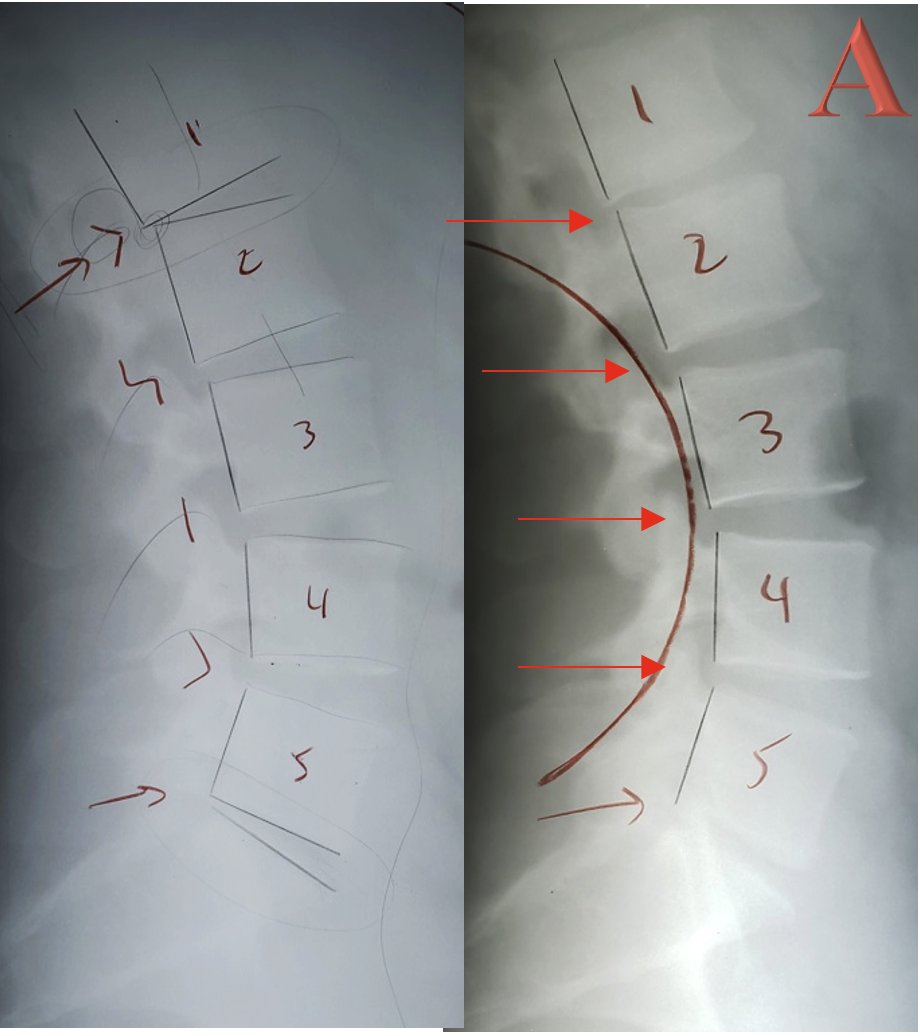
Spinal curvature and alignment changes at L1/L2 and L3/L4 — the mid-lumbar segments responsible for nerve supply to the mid-back, hip flexors, quadriceps, and inner thigh. Subluxation at these levels alters disc loading, compresses nerve roots, and disrupts the coordinated firing of the muscles that stabilize and power the lower extremities.
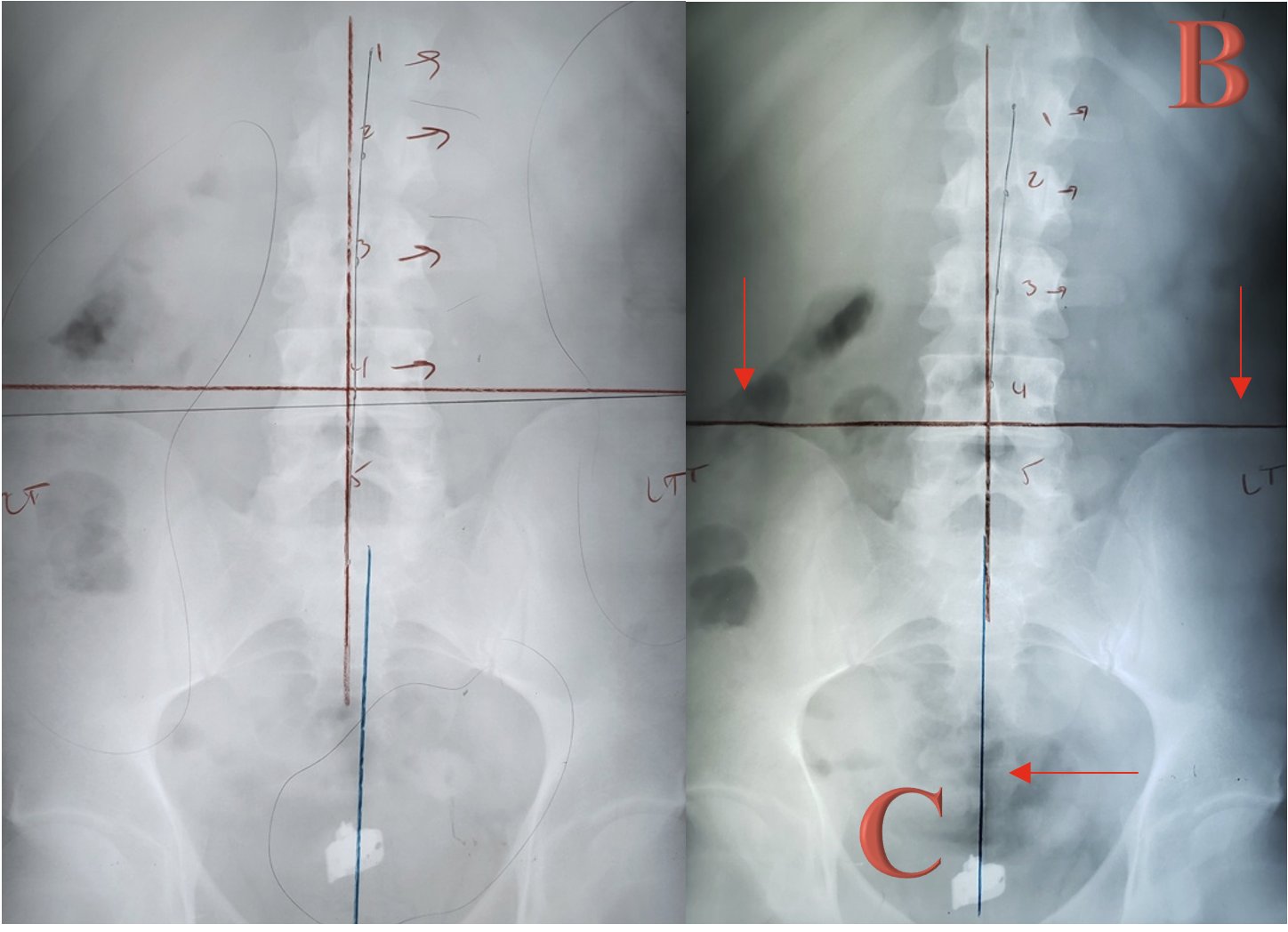
AI Sacrum (Anterior-Inferior sacrum) subluxation and pelvic imbalance — the foundation beneath the entire lumbar spine. An Anterior-Inferior sacral listing means the sacrum has displaced forward and downward, rotating the pelvis off its neutral base. This creates asymmetric loading on the lumbar vertebrae above, compresses nerve roots, and is a primary driver of the sciatica-type symptoms he presented with. Correcting the AI Sacrum restores pelvic level and removes the compensatory stress pattern that cascades through the entire lumbar spine.
Results: Performance, Sleep, and Strength Restored
The outcomes of this correction went beyond the structural. His mid-low back pain — the primary reason he came in — resolved. The sciatica-type symptoms subsided. But what he noticed most, and what his X-rays now confirm, is the functional restoration that followed structural correction.
Better sleep. More sustained energy during his physically demanding workdays. A greater sense of strength and stability in his lower back and legs. These are not incidental improvements. They are the predictable consequence of removing lumbar subluxation from a nervous system that was being chronically stressed by it.
Outcomes After Corrective Care
Measurable improvement in L1/L2 and L3/L4 spinal alignment and curvature.
Pelvic rotation and imbalance corrected on AP lumbar X-ray.
Mid-low back pain resolved.
Sciatica-type symptoms subsided.
Improved sleep quality and sustained energy during physical work.
Greater strength and stability in the lower back and legs.
Graduating from correction plan to maintenance care to preserve structural gains.
From Correction to Maintenance
He is now graduating from his correction plan to a maintenance plan. This is an important distinction. The correction plan achieved measurable structural change — the lumbar curvature improved, the pelvis leveled, the nerve roots were decompressed. The maintenance plan is designed to preserve those gains and prevent regression under the ongoing mechanical demands of his work.
For physical laborers, maintenance care is not optional — it is the logical extension of the correction. The structural stresses that produced the original subluxation do not disappear after correction. Regular maintenance adjustments ensure that the spine does not silently accumulate subluxation stress between reassessments. The goal is long-term structural integrity, not a one-time fix.
Why This Pattern Matters
A physical laborer's spine is not loaded the same way as a sedentary worker's. Every lift, carry, and sustained position amplifies the mechanical stress on a lumbar spine that is already subluxated and already compensating. The subluxation does not cause acute failure immediately — it degrades the structural foundation over time, and the occupational loading accelerates that process. By the time severe mid-to-low back pain and sciatica-type symptoms are daily, the structural compromise has been building for years through work that was done on a spine that was never properly aligned.
The decision this patient made — to proceed with corrective care without hesitation after seeing his X-rays — reflects the way structural findings communicate clearly when they are actually shown. He understood his spine the way he understood the equipment he worked with. When the foundation is off, the performance is compromised. He corrected the foundation. His performance, sleep, and strength followed. That is not coincidence. That is how Innate Intelligence operates when structural interference is removed.
There is also a systemic dimension to lumbar subluxation that physical laborers rarely connect to their structural problems. Sleep quality, immune response, and the body's ability to repair tissue after a physically demanding shift — all of these are nervous system functions. When lumbar subluxation compresses the nerve roots at L1 through L4, the interference is not confined to the mechanical pathways that produce pain. It degrades the nervous system's capacity to coordinate the recovery the body depends on between working days. The sleep restoration and strength improvement in this case were not separate outcomes. They were direct expressions of a nervous system that could, finally, do its full job.
The correction plan was not a passive process. Structural correction at the lumbar and pelvic level requires consistent participation over a defined schedule — enough time for the vertebrae to hold new positions, for the supporting tissue to adapt, and for the nervous system to reestablish function through previously compressed pathways. For a full-time laborer working physically demanding shifts, that commitment is real. This patient made it. The alternative — continuing to load a structurally compromised spine while managing symptoms — produces a predictable outcome. Subluxation does not stabilize on its own when the structural cause is unaddressed. It accumulates. At some point, the accumulation crosses a threshold where full structural restoration is no longer achievable.
The structural argument is also practical for workers who depend on their physical capacity. The low back tension that starts as manageable discomfort becomes the reason output declines, recovery takes longer, and the demands of the job become genuinely dangerous rather than simply demanding. Corrective care followed by maintenance is not overhead — it is the structural infrastructure that keeps the body performing the work it is built for.
What to Look For
Physical workers who carry significant mechanical load — construction, trades, labor, agriculture — typically develop one-sided low back tension that becomes the baseline. One hip sits higher than the other. One leg feels shorter. Standing or sitting for extended periods shifts weight to one side. These are not quirks or postural habits. They are the body compensating for lumbar subluxation and pelvic imbalance the way it always does: by adapting until it cannot adapt anymore.
Sciatica-type symptoms — radiating pain, numbness, or weakness into the lower extremities — in a physically active worker without a clear disc herniation on imaging are a strong indicator that lumbar subluxation and pelvic imbalance are the structural source. The structural X-ray evaluation, not the symptom management consultation, is where the correction begins. Have you ever had your spine checked for subluxation?
Maintenance care is the dimension of this pattern that deserves direct acknowledgment. The structural demands that produced the original subluxation do not stop when the correction plan ends. Every shift, every lift, every sustained working position continues to load the lumbar spine. Maintenance care — calibrated to the specific demands of the work — prevents subluxation from quietly re-accumulating between reassessments. Workers who complete a correction plan and stop care typically return within a year or two with the same structural findings. Workers who maintain their correction preserve the gains and continue to function at the level their corrected nervous system enables. The correction achieves the structural change. The maintenance protects it.
Is Your Spine Keeping Up with Your Work?
Physical labor puts real mechanical stress on the lumbar spine. Structural X-rays show exactly what that stress has produced — and whether subluxation is limiting your performance, your sleep, and your recovery. We serve patients across Royal Palm Beach, Wellington, and the greater West Palm Beach area.
Schedule a Structural AssessmentOr call us at (561) 795-3156
To learn more about how vertebral subluxation affects nervous system function and whole-body performance, visit our subluxation resource page.