Neck Pain, Back Pain, Anxiety, and Acid Reflux — All at Once
A 64-year-old woman came to us with a full list: neck pain, upper back pain, low back pain, anxiety attacks, and chronic heartburn and acid reflux. She had never been under corrective chiropractic care. Her spine was severely out of alignment and had been degenerating for years without anyone addressing the underlying structure.
On the surface, those complaints look like four separate problems. Neck and back pain make sense as spine-related issues. But anxiety? Acid reflux? Those don't seem like spine problems — and that's exactly why they had gone unconnected and untreated for so long.
They were all coming from the same place.
The Top of the Neck Runs More Than You Think
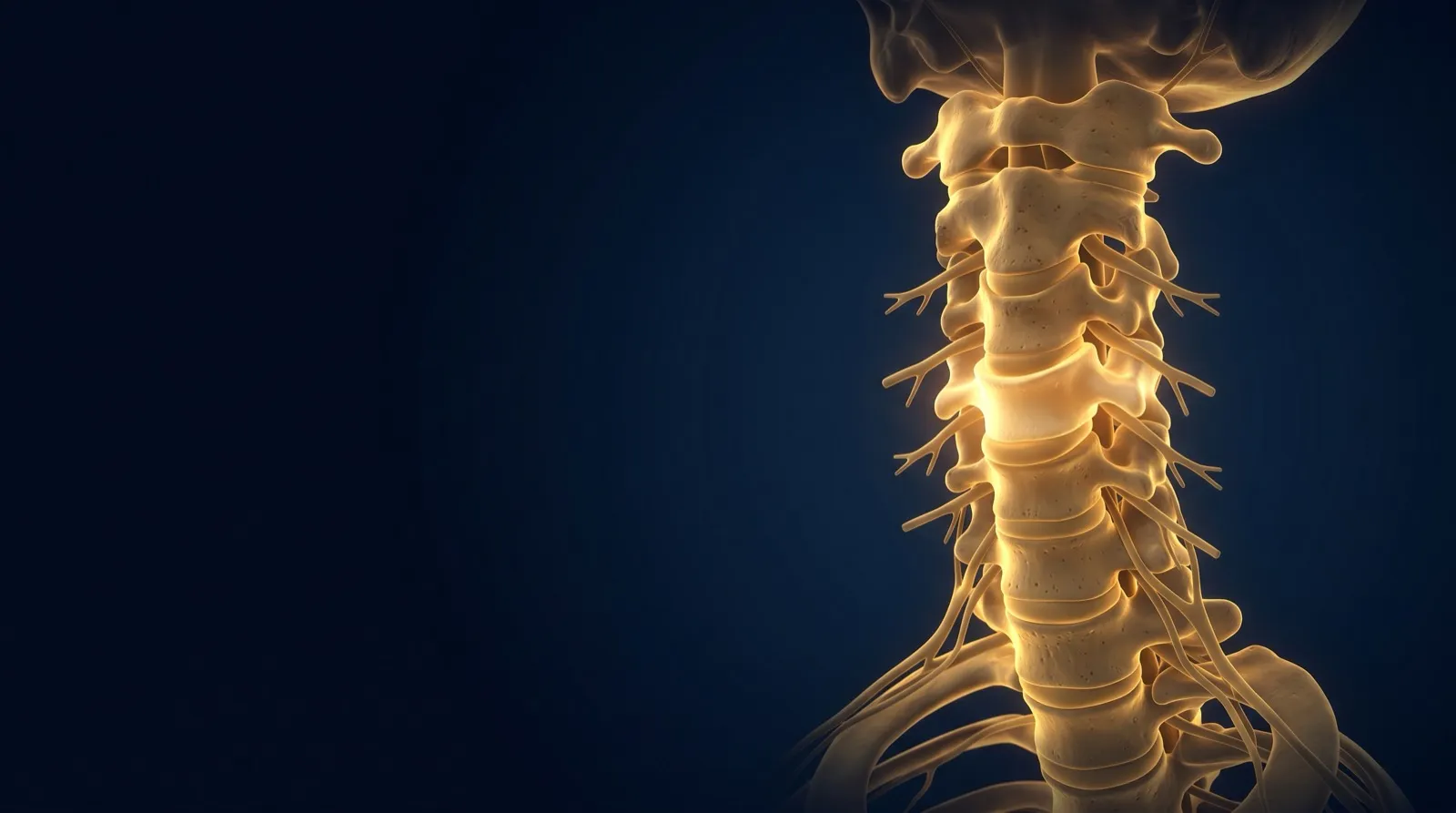
The uppermost vertebrae in the neck — the atlas (C1) and axis (C2) — sit directly below the brainstem. Every signal passing between the brain and the rest of the body runs through this region. The vagus nerve, which controls your heart rate, breathing, digestion, and stress response, exits right here. So does the nerve pathway that regulates the valve between your esophagus and stomach — the one that keeps acid where it belongs.
When those top vertebrae are out of position, they create mechanical pressure on all of that. The brain's ability to regulate the body gets disrupted. Not just neck pain — but anxiety responses that won't calm down, digestive systems that won't function properly, and a nervous system that's running in a state of low-level emergency it can't turn off.
Her X-rays confirmed exactly what we suspected.
Upper Cervical Spine AP — Before & After


What We Found — Initial X-Ray (Aug 13, 2018)
Upper cervical: Atlas and axis severely out of position. Head tilted and shifted — the bones at the very top of the spine, directly below the brainstem, were not where they needed to be.
Overall: Spine severely deviated and degenerated from ideal. Years of uncorrected subluxation had allowed the structure to deteriorate.
Twelve Months of Correction
We ran two 6-month correction plans back to back — 12 months total. The goal was to get the upper cervical vertebrae back into proper position and hold them there long enough for the surrounding structures to adapt to the corrected alignment.
Structural correction at this level is deliberate work. The upper cervical spine doesn't respond the same way as the mid or lower back. The bones are smaller, the tolerances are tighter, and the neurological stakes are higher. We moved carefully and measured progress at each re-evaluation.
Where She Ended Up — Re-evaluation (Oct 28, 2019)
Upper cervical: Marked improvement in head position and alignment. Atlas and axis moving toward proper position.
Status: On maintenance care. Spine will continue to improve and stabilize at a reduced adjustment frequency.
What Actually Changed for Her
The anxiety attacks stopped. She hadn't had one in over a year. Not reduced — gone. The nervous system that had been stuck in a heightened state because of chronic upper cervical interference was now able to regulate itself the way it was designed to.
The acid reflux was 90% resolved. Not better-managed with medication — structurally resolved, because the nerve pathways controlling her digestive function were no longer being compressed by misaligned vertebrae. On the rare occasion she notices any discomfort, she describes it as mild at worst.
Neck pain, upper back pain, low back pain — all improved alongside the structural correction.
She didn't come in for anxiety or acid reflux. She came in for pain. The structural correction addressed the cause — and the body handled the rest.
Dealing With Something That Doesn't Seem Like a Spine Problem?
Anxiety, acid reflux, sleep problems, headaches, fatigue — these often have a structural root that never gets looked at. If you've been treating symptoms without results, come in and let us look at the actual structure. You might be surprised what the X-ray shows.
Schedule a Structural AssessmentEven Modest Correction Produces Real Change
Here's something worth understanding about how this works. Full structural correction — getting every measurement back to ideal — takes time, especially when degeneration has been setting in for years. But you don't have to wait for perfect alignment to feel the difference.
Even minimal to moderate structural correction produces significant changes in how the nervous system functions. The nerve pathways don't need to be completely clear to work better — they just need less interference than they had before. As the correction progresses, the function improves with it.
This patient's case shows that clearly. Full correction wasn't complete when these results were measured. But the nervous system had already responded — dramatically — to the structural improvement that had been achieved.
For anyone in Royal Palm Beach, Wellington, Lake Worth, or the broader Palm Beach area dealing with a list of health issues that don't seem connected — upper cervical subluxation is worth investigating. The top of the neck is where the brain talks to the body. When that conversation is being disrupted, the effects can show up anywhere. Correct the structure, clear the pathway, and let the body do what it's built to do.
Why This Pattern Matters
Upper cervical subluxation is the structural case that produces the longest list of apparently unrelated complaints. The atlas and axis sit at the base of the brainstem — the region that coordinates the autonomic nervous system, including the vagus nerve pathways governing heart rate, stress response, and digestive function. When those vertebrae are out of position, the interference doesn't stay local. It disrupts regulation across multiple systems simultaneously. That's why this patient presented with neck pain, anxiety attacks, and acid reflux at the same time — and why treating each complaint separately had produced no resolution.
The key finding in this case is what happened before full correction was achieved. Anxiety attacks stopped completely. Acid reflux resolved 90%. This happened while structural correction was still in progress — not at the end. Innate Intelligence doesn't wait for perfect alignment to restore function. It responds to reduced interference. As soon as the nerve pathways at C1 and C2 had enough clearance, the nervous system began regulating what it had been unable to regulate. The body had always known what to do. It simply needed the structural obstruction removed.
What to Look For
Upper cervical subluxation rarely announces itself as a neck problem first. It is more likely to show up as systemic complaints that resist conventional treatment: anxiety that doesn't respond to stress management strategies, heartburn that persists despite dietary changes, sleep that is technically adequate but never restorative, or a baseline tension in the neck and shoulders that feels muscular but never fully releases.
Look for the cluster. A single complaint can have many causes. When multiple apparently unconnected symptoms coexist — especially when each has been managed separately without lasting improvement — the upper cervical spine deserves investigation. The AP X-ray will show the atlas and axis position clearly. What looks like several problems is often one structural problem expressing itself through several systems.
Have you ever had your spine checked for subluxation?