When the Spine Affects Everything At Once
A 53-year-old man came in referred to the office. By the time he arrived, his body had been running under significant cervical subluxation long enough for it to show up in multiple ways at once. His complaints: severe vertigo, chronic headaches, mental fog, near-total loss of neck range of motion, and radiculopathy — the tingling, numbness, and paresthesias radiating into his hands and arms.
The vertigo was the most disabling. When he lay on his left side, the room spun. He had adapted by only sleeping on his right side — not by choice, but because that was the only way his vestibular system would let him rest. That adaptation had become his normal.
The neck range of motion loss was a close second in practical impact. He couldn't turn his head far enough to look behind him while driving. A function most people take completely for granted — he had quietly worked around it, probably for longer than he realized.
The Cervical Spine as the Source
When a patient walks in with vertigo, arm tingling, and can't turn their head — the cervical spine is the first place to look. Not because those things always come from the spine, but because that combination, presenting together at this severity, has a structural explanation more often than not.
The cervical spine houses the nerve roots that supply the arms and hands. It also sits adjacent to the blood vessels and nerve pathways involved in balance and spatial orientation. When the vertebrae are subluxated — misaligned in ways that create mechanical pressure and neurological interference — the effects ripple outward through every system those nerves and vessels serve.
Fix the structure. Watch the body heal itself. That's not a promise about any specific outcome — it's an acknowledgment of what the body can do when the nervous system is no longer working against interference.
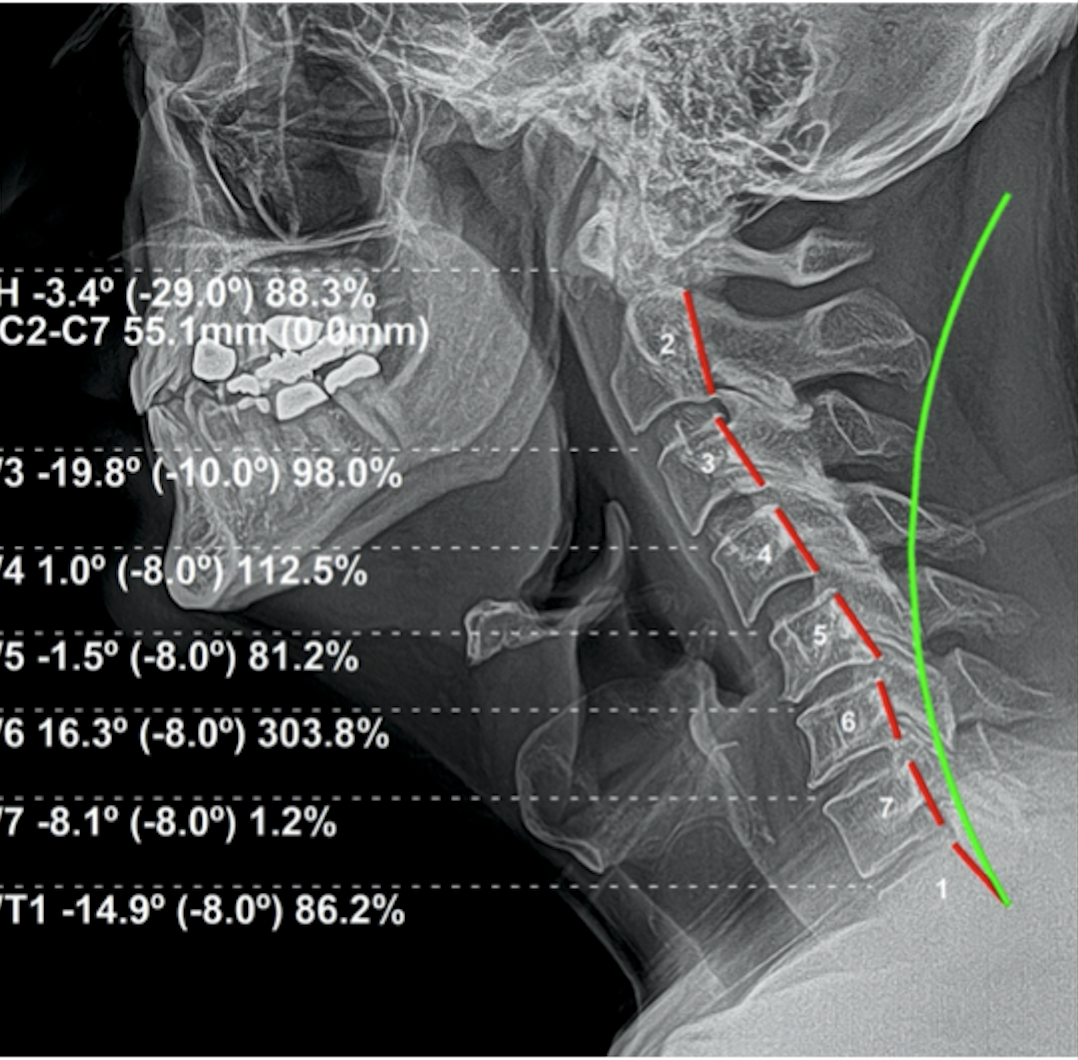
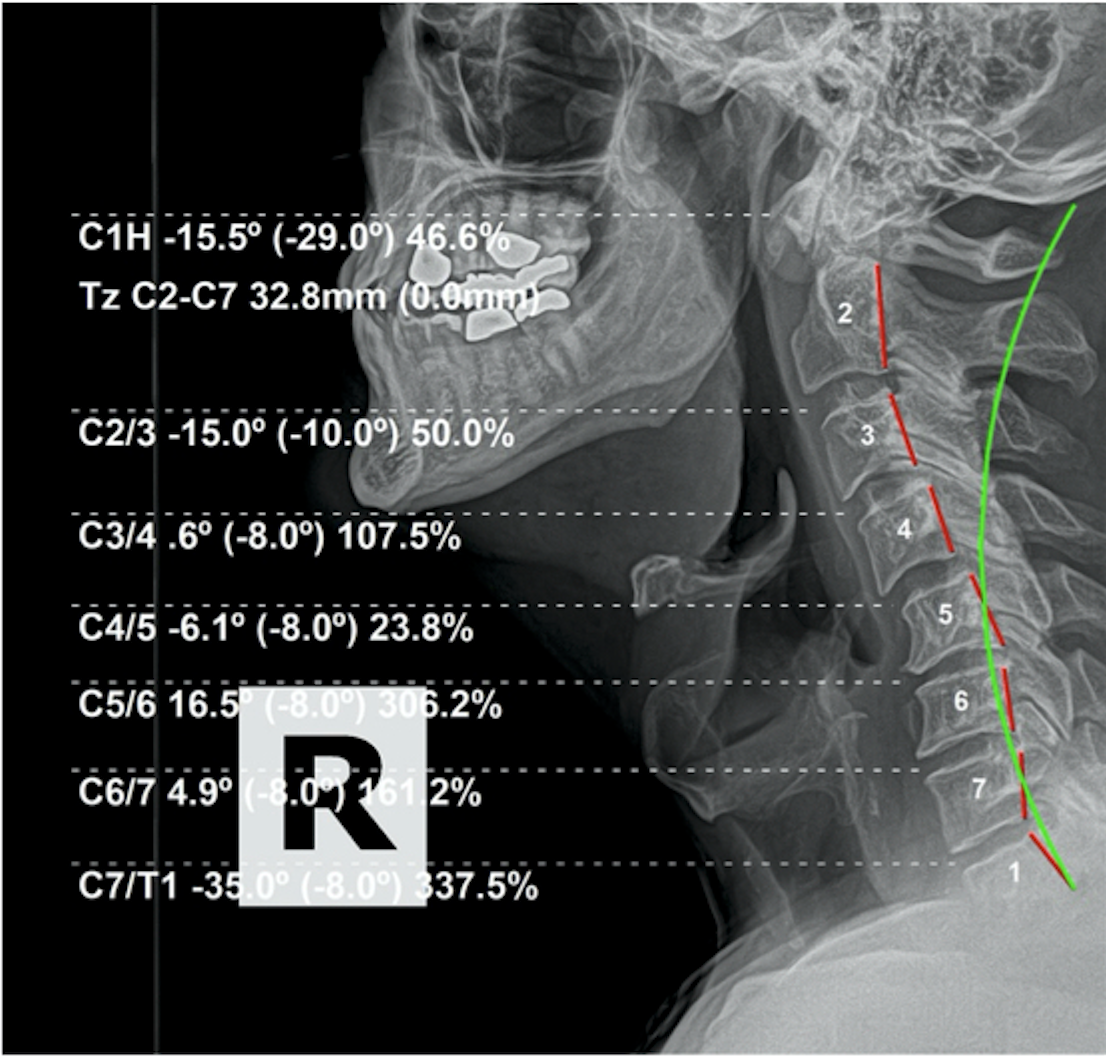
Cervical Spine Lateral — Before & After
What We Found — Initial Assessment
Cervical subluxation: Present on lateral X-ray — structural changes consistent with long-standing uncorrected subluxation.
Permanent changes: Some subluxation-related structural changes present from years without corrective care — disc and bony adaptation.
Complaints: Severe vertigo (position-dependent), chronic headaches, mental fog, radiculopathy into hands and arms, near-total loss of neck rotation.
Functional limitation: Could only sleep on right side. Could not turn head far enough to check blind spots while driving.
What Changed in the First Two Months
He started a 6-month spinal structural correction program. The goal was to correct the subluxation — to move the cervical vertebrae back toward proper alignment and hold that correction through repeated, specific adjustments over time.
Within the first two months, before the correction plan was even half complete, the changes were already significant enough to notice clearly. The vertigo resolved. He could sleep on either side. The room no longer spun when he rolled over.
The paresthesias — the tingling and numbness running into his hands and arms — resolved. The nerve roots that had been compressed by the subluxated vertebrae were no longer under that mechanical stress, and the sensation along those pathways returned to normal.
The range of motion came back. He could look behind him again. After however long that had been unavailable to him, he could check a blind spot while driving without thinking twice about it.
What Changed — Within First 2 Months
Vertigo: Resolved. Could sleep on either side without the room spinning.
Radiculopathy: Paresthesias into hands and arms resolved. Nerve root compression relieved.
Range of motion: Returned. Could rotate head fully — including to check behind him while driving.
Headaches / mental fog: Improved alongside structural correction.
Permanent Changes Don't Mean Permanent Limitation
His X-rays showed some changes that are permanent — structural adaptations that accumulated over the years his cervical subluxation went without corrective care. Those don't reverse. The disc narrowing that happened, the bony adaptation that occurred — that's part of the history now.
But permanent structural changes in the past don't prevent correction in the present. What the re-evaluation showed was that the structure was still capable of moving toward better alignment. The subluxation was correctable. And when it corrected, the body responded — quickly, clearly, and across every system that subluxation had been affecting.
The plan going forward is continued correction and maintenance care. The degeneration that had been progressing stops when the structural load driving it is removed. Over time — months, years, decades — that sustained correction and maintenance prevents the degenerative process from resuming and protects the quality of life those 2 months of rapid change made possible.
Vertigo, Arm Tingling, Headaches — and Nobody Has Looked at Your Neck?
These aren't separate problems requiring separate specialists. They can be the same spine, the same subluxation, expressing itself through multiple systems at once. Come in and let us look at the structure — and show you what's actually driving it.
Schedule a Structural AssessmentWhat This Case Teaches
The most striking thing about this case isn't the speed of the change — though resolving vertigo, radiculopathy, and range of motion loss within two months is genuinely remarkable. It's what it reveals about how the body works when the structural interference is removed.
His body already knew how to stop the room from spinning. It already knew how to send clear signals through the nerves in his arms. It already knew how to rotate his cervical spine through a full range of motion. None of that required teaching or therapy or training. It required removing the structural obstacle that was preventing it.
For anyone in Royal Palm Beach, Wellington, Lake Worth, or Palm Beach Gardens dealing with vertigo, arm tingling, headaches, or neck restriction — the question isn't whether those things can get better. The question is whether anyone has looked at the spine that may be at the root of all of them.
Why This Pattern Matters
A multi-system presentation — vertigo, radiculopathy, near-total rotation loss — looks like several problems requiring several specialists. In cervical subluxation cases, it is almost always one structural problem expressing itself through every system the affected nerve pathways serve. The atlas and axis position, the integrity of the cervical curve, the mechanical pressure on the nerve roots and adjacent vessels: one structural address, multiple downstream effects. Treating the downstream effects individually leaves the structural source in place.
The two-month response timeline in this case is also worth understanding. Vertigo resolved, paresthesias cleared, and rotation returned — all within sixty days, before the six-month correction plan was even half complete. That's not slow, incremental improvement. That's Innate Intelligence responding rapidly once the structural interference was reduced enough to allow it. The body had always been capable of ending the vertigo and restoring the signal down those nerve roots. It needed the subluxation corrected first. Even with permanent structural changes already present from years without correction, the capacity to respond was completely intact.
What to Look For
The most telling sign in this case is what he adapted around: sleeping exclusively on one side, and working around an inability to check blind spots while driving. When a functional limitation becomes habitual enough that you stop noticing it as a limitation — that is the sign. Cervical subluxation progresses quietly. The adaptations accumulate. By the time vertigo and arm tingling are present together, the structural problem has usually been building for years.
Positional vertigo combined with arm or hand symptoms, chronic headaches, or restricted neck rotation is a cluster that points directly to the cervical spine. The lateral X-ray will show the curve and the structural position. If that combination of complaints is present and nobody has ever evaluated the cervical structure, that is where to start.
Have you ever had your spine checked for subluxation?