How He Arrived
In this month's Spinal Correction Spotlight we are reviewing the comparison X-rays of a 33-year-old man. He found us on Google, so please leave a review, because your testimonial helps us reach more people.
He originally reported suffering from significant low back pain. He works in the tech industry, so his repetitive stress is sitting. His spinal condition is good, which always improves our expectation for outcomes.
He was already engaged in exercise and good dietary habits, so he had at least two of the five Health Habits we adhere to. Because of his low back issues he was not getting restorative sleep, and that plays a role in a positive outlook and mental attitude.
What His Films Showed
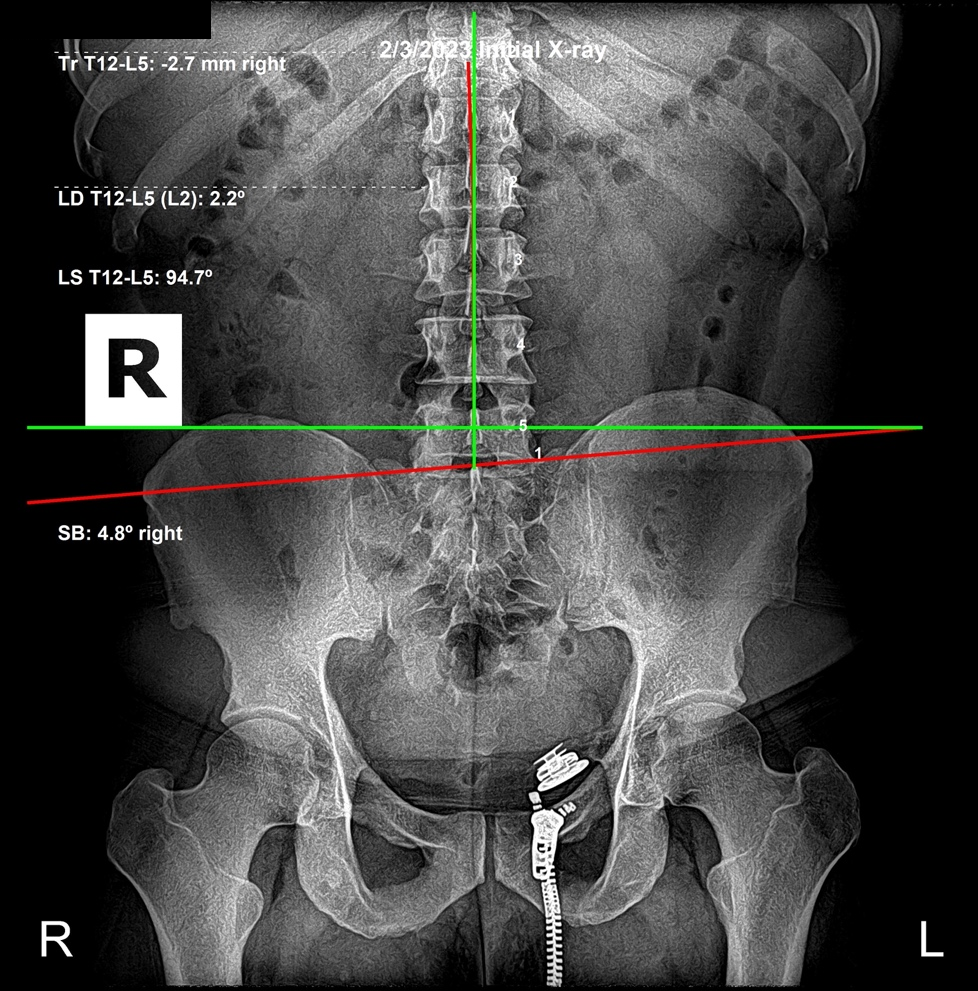
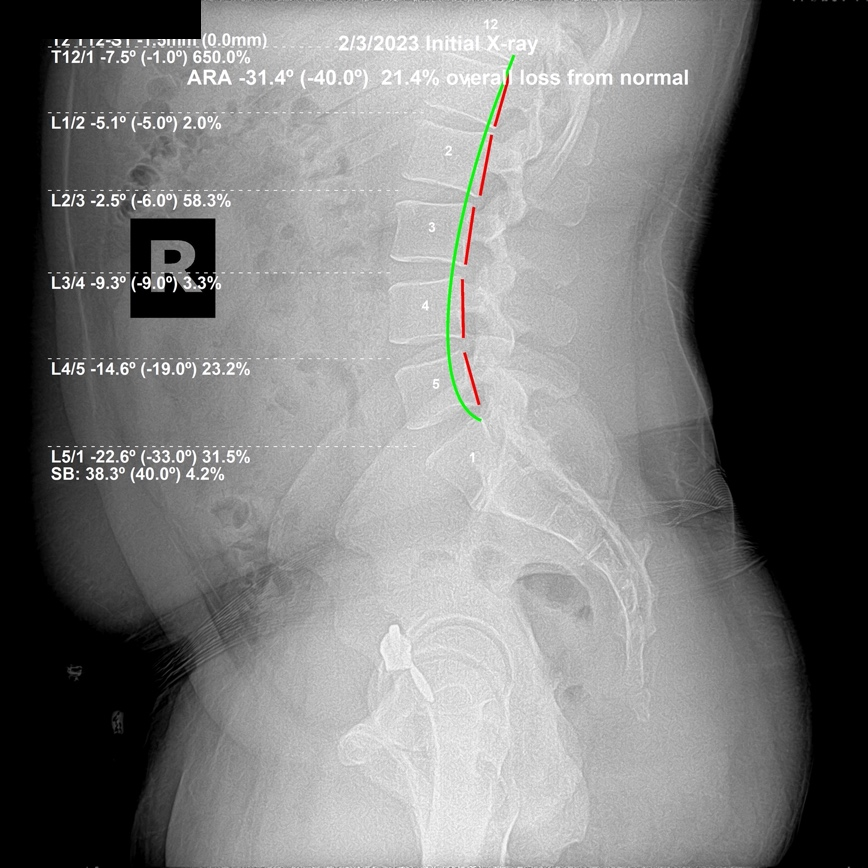
The initial images showed an AI sacrum subluxation on the right, anterior and inferior. There were also indications of ligament laxity between L2 and L3, as well as L3/L4.
As a result of his lumbopelvic subluxations, his spine was compensating by straightening out, which increases the strain on the lumbar nerves.
Clinical Findings — Initial Examination
Patient: 33-year-old male, tech industry, found the practice through Google
Presenting complaint: Significant low back pain; repetitive stress from prolonged sitting
Health habits at intake: Exercise and diet already established; restorative sleep disrupted by low back pain
X-ray type: AP lumbar and lateral lumbar
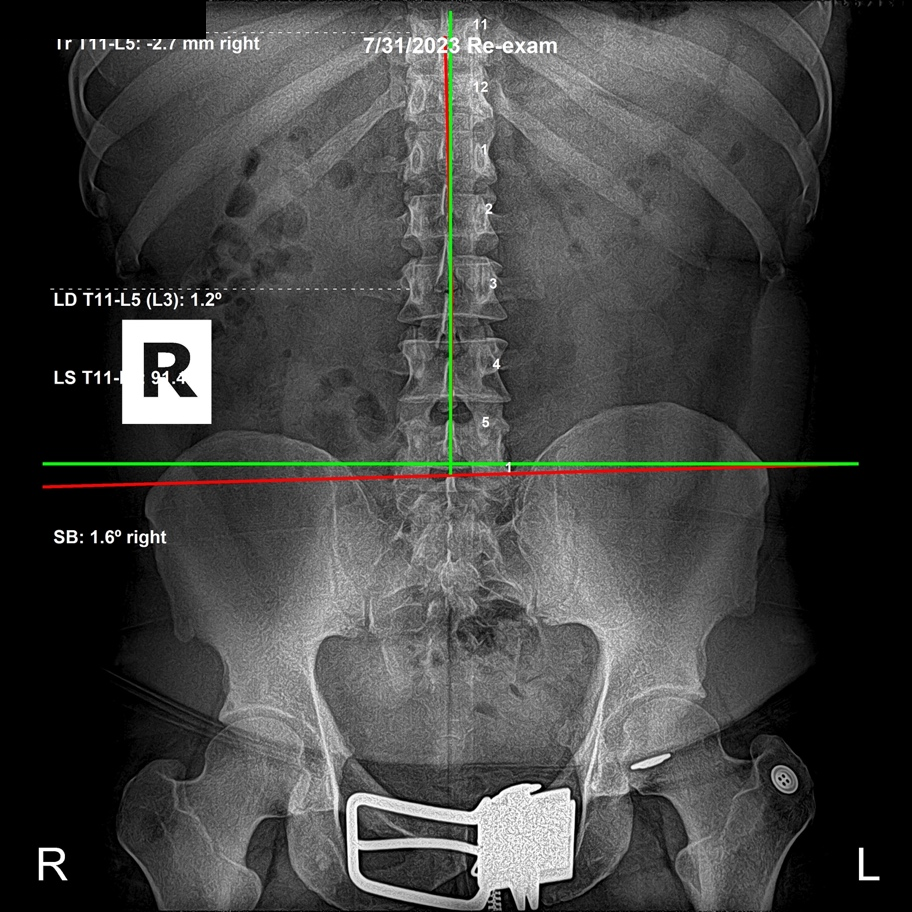
Initial X-ray: AI sacrum subluxation on the right (anterior and inferior); ligament laxity at L2/L3 and L3/L4; lumbar spine compensating by straightening
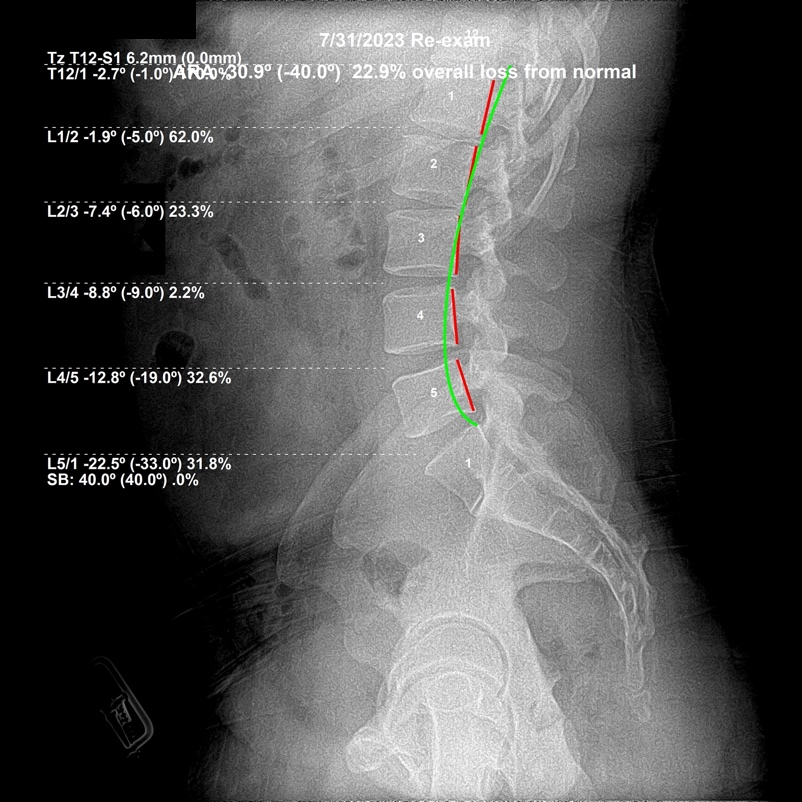
Re-evaluation X-ray: Sacral subluxation reduced; lumbar alignment almost textbook ideal
Ergonomic change: Standing desk introduced to address the ongoing stress of sitting
Outcome: Maintaining work without discomfort; improved participation in Activities of Daily Living
Lumbar AP — Before & After
Lumbar Lateral — Before & After
What the Follow-Up Films Showed
In the follow up films the sacral subluxation reduced, while the alignment of his lumbar bones is almost textbook ideal.
The chronic stress of sitting is what continues to contribute to the sacral misalignment. With some ergonomic changes, in his case a standing desk, he has made significant strides forward in his overall Quality of Life.
By incorporating the final piece of his Health Habits, a clear nervous system through chiropractic adjustments, he has been able to maintain his work without discomfort and improve his participation in his chosen Activities of Daily Living. That adds Quality to life.
What This Case Shows
A spine in good condition responds well, and this case shows what that looks like when the other health habits are already in place. Sitting will keep applying its stress, and the ergonomic change addresses that side of it while the adjustments address the subluxation.
I am not the healer. I move the bone; God does the healing. You are a self-healing organism, and when you are subluxation free, not only does your spine heal, but your body expresses life the way you were created to.
Sitting Is a Load Your Spine Carries All Day
A desk job applies the same stress to the same structure every day. A structural evaluation shows what it has done so far. Come in for an X-ray analysis and find out what your own films show.
Have Your Spine Checked for SubluxationOr call us at (561) 795-3156
Related: Another desk worker, this time in the upper cervical spine.