
The Patient
A 35-year-old female who presented seeking wellness care. She had minor aches and stiffness but no acute crisis — nothing that would have sent her to a conventional healthcare provider. What brought her in was her spouse's corrective care. As a family, they had been watching the structural changes in his spine unfold through X-ray reassessments, and she made the decision to have her own spine evaluated before problems developed rather than after.
That distinction — proactive versus reactive care — is one I return to constantly in practice. Subluxation is a structural condition. It does not announce itself with dramatic symptoms until it has been present long enough to produce significant structural and neurological consequences. The patients who act on structure, rather than waiting for pain, consistently achieve better outcomes with less correction time and less accumulated degeneration.
What the X-Rays Showed
Her initial lumbar AP X-ray revealed subluxation patterns — misalignment in the lumbar segments, AI Sacrum (Anterior-Inferior sacrum) displacement affecting pelvic level, and the structural changes that accumulate when the spine bears load asymmetrically over time. None of this was producing an acute crisis. All of it was creating the minor stiffness, reduced exercise tolerance, and the subtle nervous system dysregulation she had accepted as normal.
After one year of corrective care, the structural change is visible and measurable on her re-evaluation X-rays.
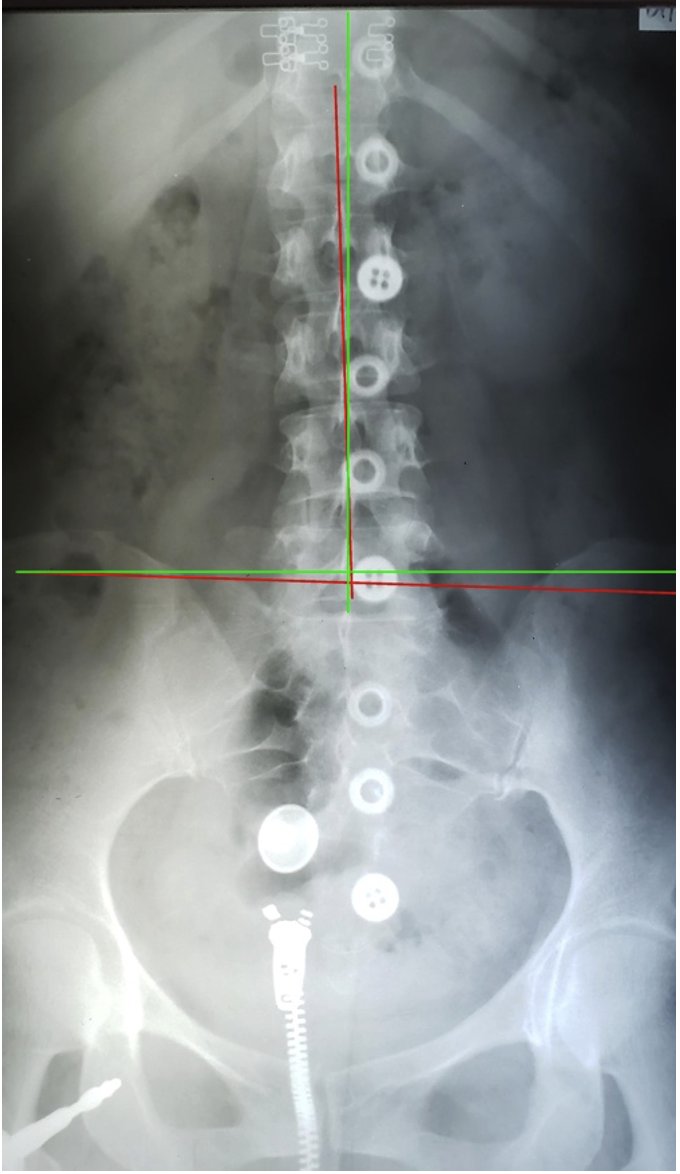
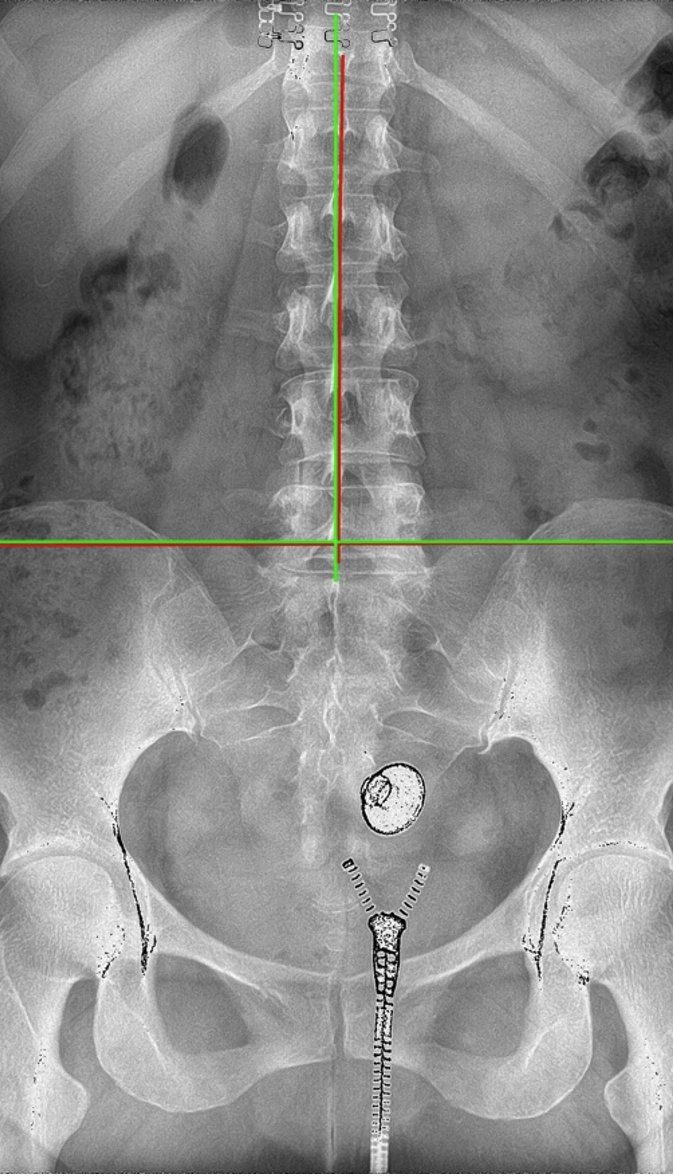
What One Year of Correction Produced
The word she used to describe the overall effect was dramatic — and the structural evidence supports that. But what stood out as much as the X-ray changes were the functional improvements she reported across every dimension of her daily life.
More energy. A renewed ability and willingness to exercise. Decreased stiffness throughout the day. Improved mental clarity. And something she did not expect: a measurably better response to stress. She feels calmer. Her nervous system is regulating differently — because the structural interference that was dysregulating it has been corrected.
These outcomes are neurological. The lumbar spine houses nerve roots that coordinate lower extremity function, pelvic organ regulation, and contribute to the autonomic nervous system's management of the body's stress response. When the subluxation is removed, the nervous system restores the functions it was always meant to perform. The body does not need to be told what to do — it needs the structural interference removed so it can do it.
Outcomes After One Year of Corrective Care
Measurable lumbar alignment improvement on AP X-ray.
AI Sacrum (Anterior-Inferior) subluxation corrected; pelvic level restored.
Significant improvement in energy levels.
Renewed ability and willingness to exercise regularly.
Decreased stiffness throughout daily activity.
Improved mental clarity and cognitive function.
Enhanced stress adaptation — overall sense of calm restored.
The Case for Proactive Family Care
This case represents something I see regularly in Royal Palm Beach and the greater West Palm Beach area: one family member's results become the catalyst for the rest of the family. When a spouse, parent, or sibling sees what structural correction actually looks like on X-ray — and watches the functional changes that follow — the decision to act becomes obvious.
Subluxation does not wait for a convenient time to develop. It accumulates silently, producing structural changes that show up on X-ray long before they produce the kind of pain that sends people to a doctor. The question is not whether subluxation is present — in most adults who have never been evaluated structurally, it is. The question is whether you act on it before the damage accumulates, or after.
Why This Pattern Matters
There is a structural argument for proactive care that has nothing to do with preventing pain. It is this: correction is more effective, more complete, and faster when the structural damage is less advanced. A spine with lumbar subluxation and an AI Sacrum finding but without years of accumulated degeneration responds better to corrective care than one that has been subluxated for another decade. The window for maximum restoration does not stay open indefinitely. It narrows as time passes and as structural adaptation deepens. Acting before the crisis does not just prevent suffering — it preserves the structural potential for a more complete correction.
The other dimension of this case is how she arrived. Her husband had been through the structural correction process. She had watched his X-rays change. She had seen what the correction looked like and what it produced. Her decision to be evaluated was not driven by a symptom. It was driven by understanding. That is the model this practice is built on. Not marketing. Not urgency. Evidence that travels through families because the results speak clearly enough to reach the people who matter most to each patient.
What to Look For
The proactive evaluation candidate is the adult who describes "minor aches," "occasional stiffness," "just stress on the body" — and has never had a structural X-ray of the spine. Minor symptoms at 35 can reflect structural compromise that, left unaddressed, becomes a significant health burden at 45 or 55. The absence of crisis does not mean the absence of subluxation. It means the body is still compensating. Evaluating the structure before the compensation fails is always the right call.
Family members of existing patients are in a unique position: they have already seen the structural correction process from the outside. They know what the X-rays show. They know what correction looks like in someone they love. The question they usually ask is the right one: "Should I get checked?" The answer, for any adult who has never had a structural evaluation, is yes. Have you ever had your spine checked for subluxation?
Don't Wait for the Crisis. Act on the Structure.
If someone in your family has experienced the results of structural correction, that is reason enough to have your own spine evaluated. A structural X-ray assessment at Rochet Family Chiropractic reveals what is actually happening — not just what you feel. Serving Royal Palm Beach, Wellington, and the greater West Palm Beach area.
Schedule a Structural AssessmentOr call us at (561) 795-3156
To learn more about how vertebral subluxation affects nervous system function and whole-body health — often without obvious symptoms — visit our subluxation resource page.