
He Felt Better. He Stopped. The Subluxation Didn't.
A 45-year-old man originally came to us for back discomfort. He received some adjustments. The discomfort eased. He felt better — and, as many people do when they feel better, he stopped care. The problem seemed resolved. Life went on.
Nearly four years later, he came back.
This time the presentation was different. Headaches that had become a regular part of his life. Neck and lower back discomfort so severe he could not work through a full day without it. He could not exercise. He could not get on the floor and play with his young children the way a father should be able to. The life he expected to live — the work, the activity, the presence for his family — had been progressively taken from him by a spine that had been left to compound uncorrected for four years.
"Felt Better" Is Not "Fixed"
This is the distinction that matters most in this case — and it's one that gets people into trouble more often than almost anything else in chiropractic care.
Discomfort is not the subluxation. Discomfort is a signal the body produces when the structural problem has become severe enough to register. When that signal quiets down — through adjustments, through the body's adaptation, through the natural fluctuation of how nerve irritation presents — the subluxation is still there. The bone is still out of position. The nerve is still under pressure. The abnormal loading on the discs and joints is still happening.
Feeling better means the signal turned down. It does not mean the problem is gone.
For four years, his atlas subluxation and the additional vertebral subluxations throughout his cervical spine continued to do what uncorrected subluxations do: compound. The structural integrity of his spine declined. The nerve interference accumulated. The compensatory misalignments throughout the rest of his spinal column deepened. And eventually the load exceeded what his body could quietly absorb — and it came back loudly.
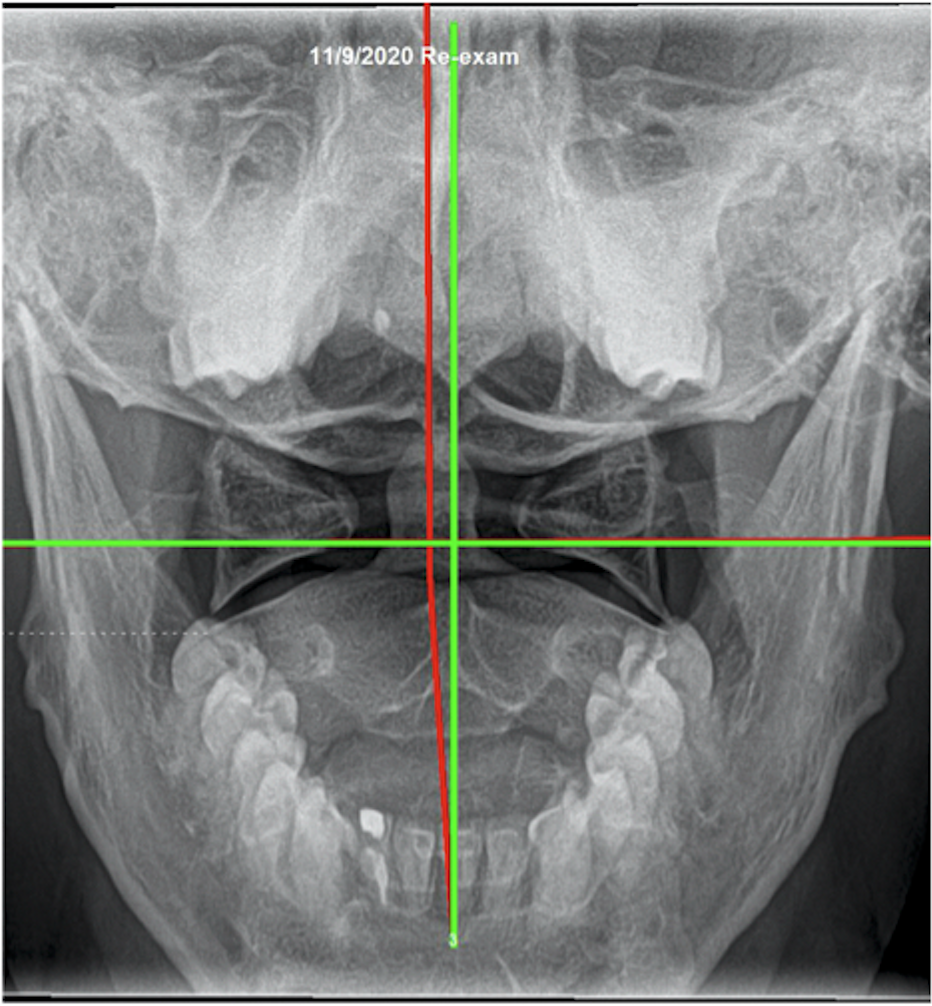
Atlas (C1) AP — Before & After
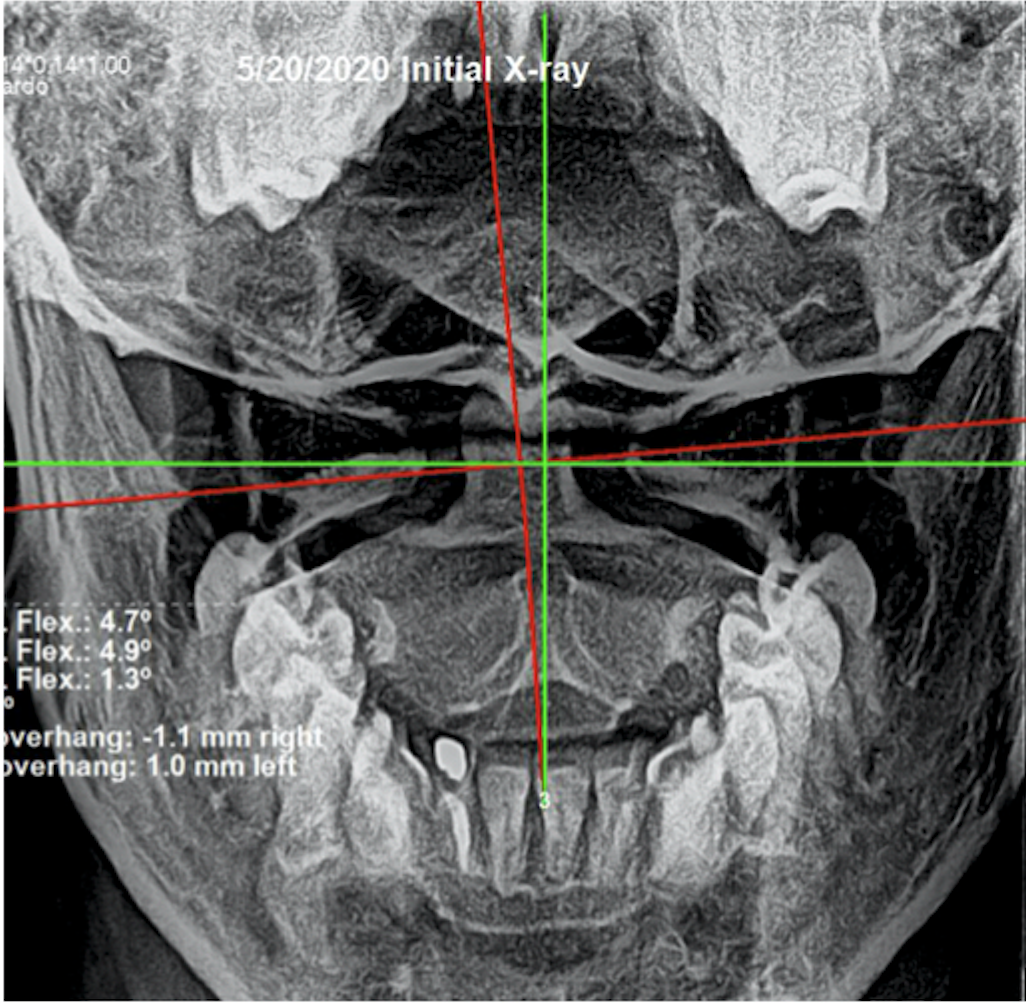
What We Found — Re-examination (May 20, 2020)
Atlas (C1) position: Severe subluxation. Overhang measurements: -1.1mm right / 1.0mm left — significant bilateral displacement of the atlas relative to the axis below it.
Additional findings: Multiple vertebral subluxations throughout the cervical spine, compounding the atlas misalignment.
Context: Four years of uncorrected subluxation had allowed the structural problem to progress significantly beyond where it was at the original presentation.
Six Months of Corrective Care
We started a 6-month corrective care plan. The atlas was the primary target — getting C1 back to its proper position relative to the skull and the axis below it, and holding that correction long enough for the surrounding ligaments and soft tissues to stabilize in the corrected position. The additional cervical subluxations were addressed alongside the atlas correction as the overall spinal structure was progressively restored.
At re-examination in November 2020 — six months from the start of care — the structural change was measurable on film and unmistakable in his life.
Where He Ended Up — Re-examination (Nov 6, 2020)
Headaches: Complete resolution. All headaches gone.
Back discomfort: Complete resolution. All discomfort resolved.
Work capacity: Back to working through a full day without limitation.
Exercise: Back to exercising — something he had been unable to do before starting care.
Energy: Significantly improved.
Most important result: Able to be the dad he expected himself to be — present, active, on the floor with his children.
The Result That Mattered Most
Every case has a number on a measurement and a life behind it. The X-rays show the correction. But what mattered most to this patient — the result he talked about when he talked about why this was worth doing — was his children.
He couldn't get down and play with them before. He was in the room, but he wasn't fully there — because his body was managing too much structural stress to let him be. After correction, that changed. He could be on the floor. He could move. He could show up the way he expected himself to show up as a father.
That's not a clinical outcome. That's a life. And it was four years delayed because "felt better" got mistaken for "fixed."
He was so moved by the results — and so clear on what the delay had cost him — that after completing the 6-month corrective plan, he decided to continue with another course of care to further improve his spinal alignment and subluxation correction. Not because the discomfort returned. Because he understood, finally, what he was protecting.
Felt Better Once and Stopped? Read This.
Feeling better is the signal going quiet — not the problem going away. If you stopped care when the discomfort eased, the subluxation is still there, still compounding. There is no better time than now to find out where things actually stand. Come in for a structural evaluation before four years become eight.
Schedule a Structural AssessmentOr call us at (561) 795-3156
What the End of Year Asks Us to Consider
December is a natural time for reflection. What is working. What isn't. What we've been putting off. What we owe to the people who depend on us.
This patient's story is a useful mirror for that kind of reflection. He made a decision four years ago that felt reasonable at the time — he felt better, so he stopped. He didn't do anything wrong. He just didn't understand that "feeling better" and "corrected" are not the same thing. By the time he came back, the cost of that gap was visible in his life in ways that were hard to miss.
The cervical subluxation doesn't wait for you to be ready to address it. It compounds on its own timeline. The question is only when you choose to correct it — and how much of your life you are willing to have interrupted in the meantime.
For anyone in Royal Palm Beach, Wellington, Lake Worth, Palm Beach Gardens, or across the Palm Beach area who stopped care when they felt better and hasn't been back since — this case is worth sitting with. Come in. Find out what's there. The structural evaluation is where it starts.
Why This Pattern Matters
The "felt better and stopped" pattern is not a failure of motivation — it is a misunderstanding of what discomfort means. Pain and subluxation are not the same thing. Pain is the signal the nervous system produces when structural interference has accumulated past a threshold the body can quietly absorb. When care reduces the structural load enough to bring that signal below the threshold, it goes quiet. The subluxation does not go with it. The bone is still out of position. The nerve is still under pressure. The abnormal disc loading continues. And without the corrective inputs that were keeping the structural problem from compounding, it resumes compounding on its own.
Four years is a long time. The atlas overhang measurements at re-entry — -1.1mm right, 1.0mm left, with multiple additional cervical subluxations — show what four years of compounding produces. And yet the body still responded. Six months of correction restored full work capacity, full exercise capacity, and full presence as a father. Innate Intelligence does not abandon the structure just because it has been neglected. The capacity to correct was still there. It needed to be engaged.
What to Look For
The pattern worth recognizing: prior chiropractic care that reduced symptoms, a gap of months or years after stopping, and a return of complaints that are more severe and more limiting than the original presentation. The original problem didn't go away and come back — it was always there, progressing silently. The return is the accumulation becoming visible again.
The more personal signal is the gap between what you can do and what you expected to be able to do. Work that is harder than it should be. Activities you have quietly stopped attempting. Presence in your own life that has been eroded by a spine managing too much structural stress to let you fully show up. If that description is familiar, the atlas AP X-ray will show you what four years — or however many years it has been — of compounding actually looks like, and what is still correctable.
Have you ever had your spine checked for subluxation?