
What Brought Her In — and What We Found
This 33-year-old woman came to Rochet Family Chiropractic after friends who had started care showed her their before-and-after spinal X-rays. The images were compelling. Seeing the structural difference between an uncorrected spine and a corrected spine in people she knew personally was enough to prompt the question: what does mine look like?
She arrived with minimal complaints. Some mild neck discomfort — which she had attributed entirely to soreness from exercise. Nothing that would have driven her to seek care on its own. But she was curious, and she was motivated to be proactive. That motivation, and the X-ray examination that followed, changed her trajectory.
The lateral cervical X-ray told a familiar story: significant cervical subluxation in a woman who had attributed her only symptom to gym soreness. The structural problem had been present long enough to be measurable on film — and long enough that the mild neck discomfort she had normalized as exercise-related was, in reality, a structural signal she had not yet learned to read correctly.
Three Months Into a Six-Month Plan
Clinical Findings — Lateral Cervical X-Ray Analysis
Patient: 33-year-old female; referred by friends who shared before-and-after X-rays
Presenting complaint: Mild neck discomfort (attributed to exercise soreness)
X-ray type: Lateral cervical
Finding: Significant cervical subluxation confirmed on initial lateral film
Care plan: 3 months of specific corrective adjustments at time of this spotlight
Interim X-ray: Significant cervical alignment improvement in 3 months
Decision: Elected to continue with second 3-month phase
QOL improvements: Sleep improved; exercise performance and recovery improved
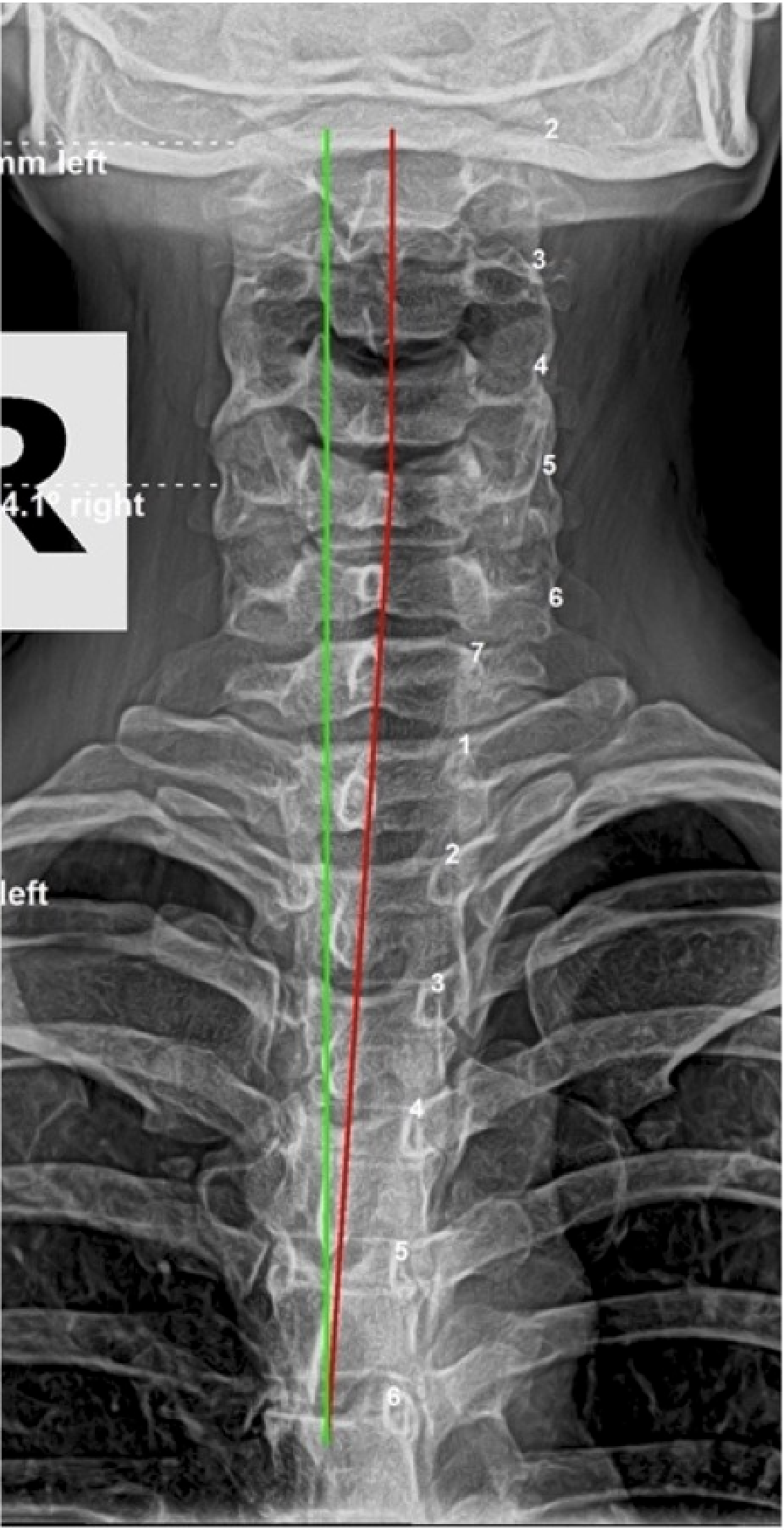
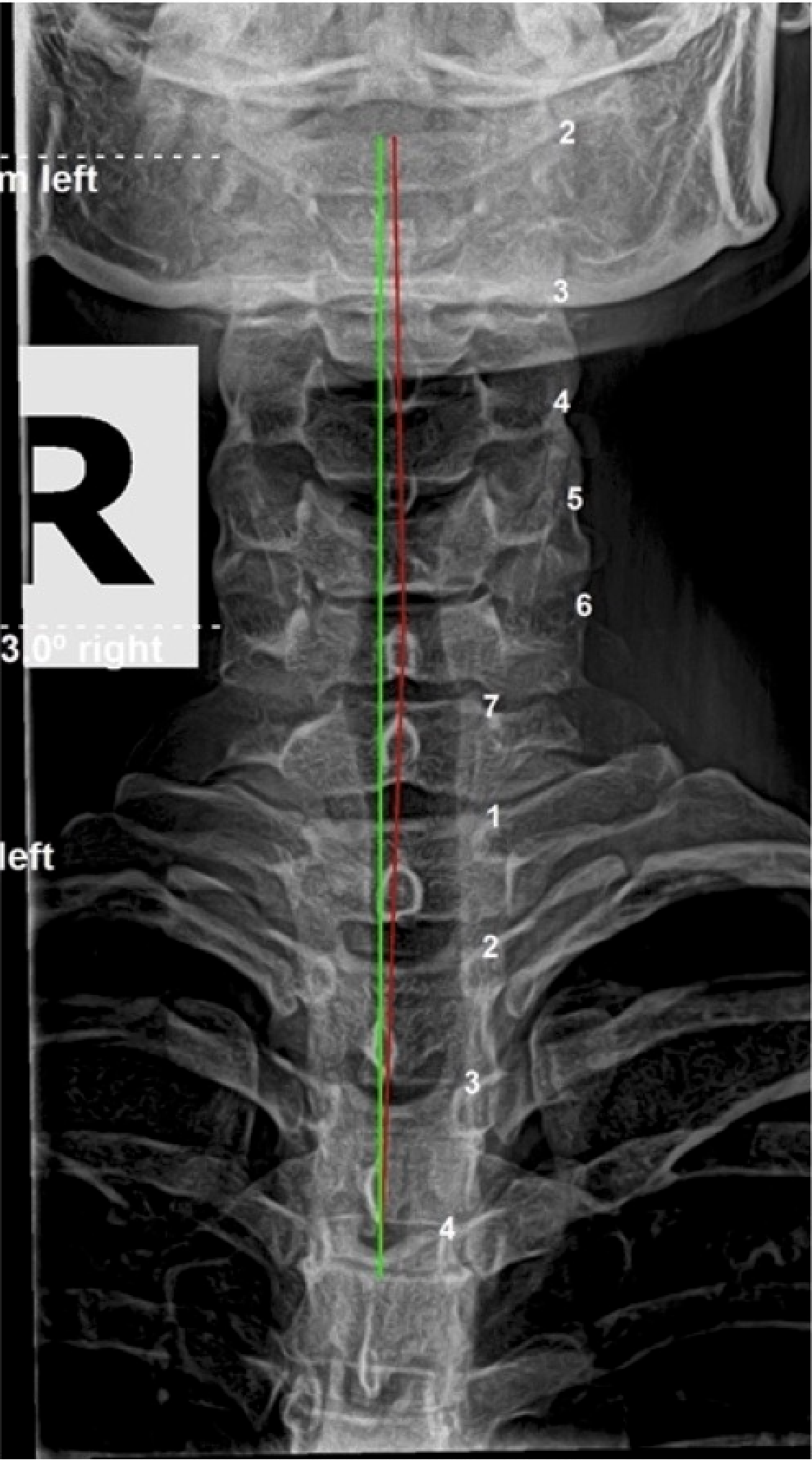
We recommended a six-month corrective plan based on the initial X-ray findings. She committed. Three months in, we took an interim lateral cervical X-ray. The spine had gone through a significant correction in its alignment — a measurable, structural improvement documented on film in only three months of consistent, specific chiropractic adjustments. Her Innate Intelligence was doing exactly what it was designed to do when the interference was removed.
Cervical Lateral — Before & 3-Month Interim
What Changed — and Why She Is Continuing
The structural correction visible on the three-month interim X-ray was congruent with what she was experiencing. Her sleep had improved. Her exercise performance and recovery had improved. These are not outcomes we target directly — they are what the nervous system produces when vertebral subluxation is corrected and Innate Intelligence has the structural freedom to govern the body as it was designed to. She had come in expecting to address mild neck discomfort. The correction went deeper than that.
Based on how favorable the response to care had been, she elected to continue with the second three-month portion of her corrective plan. The goal is to continue the structural restoration already underway and to extend what has already been gained. She did not wait for her spine to communicate through significant symptoms. She came in out of curiosity, started care before the problem compounded, and is now positioned to maintain a structurally corrected spine for the long term. That is the ideal path, and she is walking it.
I move the bone. God does the healing. The body, designed to self-heal and self-regulate through Innate Intelligence, does exactly that when the structural interference is removed. This case is a quiet but powerful example of that truth.
Why This Pattern Matters
This case pairs with the November post in a specific way: two women, same age, same proactive motivation, both found significant cervical subluxation before anything forced their hand. What drove both of them in was social exposure to X-ray results. One person corrects their spine, shares the image, and someone in their circle recognizes something in the before picture. That recognition — "that looks like how I feel" — is how proactive patients find their way to structural correction before the body escalates.
The three-month interim correction in a proactive patient also demonstrates something about physiology. A spine not yet in crisis corrects faster and more completely than one that has been compensating for decades. Starting before symptoms force the issue is not only better for the person — it is clinically more efficient. Innate Intelligence has less ground to cover when the structural interference is addressed early, before load has accumulated into degeneration and adaptive pattern changes.
The decision to continue to the second three-month portion of the plan is significant. She elected to continue based on the results she was already experiencing — improved sleep, better exercise performance and recovery. Those were not the reasons she came in. She came in with mild neck discomfort she attributed to training. The correction revealed a deeper level of function she had not anticipated. That is the consistent report from proactive patients: they come in for one thing and discover that their nervous system was carrying interference across multiple channels. When the interference is removed, the restoration extends further than they expected.
The long-term positioning this patient achieved — starting correction before the spine reached a crisis, completing care voluntarily, choosing to maintain — represents the ideal structural arc. She will carry a corrected spine into the next decade of her life. She will not face the correction timeline of a patient who waited until pain became obligatory. The time investment was minimal. The structural benefit compounds forward. That is the argument for proactive care in its purest form.
The social exposure model this case documents also has a specific mechanism that distinguishes it from other forms of health referral. A friend sharing their before-and-after spinal X-ray is not describing a subjective experience. They are showing a structural change measured in degrees on a standardized radiographic image. The person receiving that information can see the before-curve and the after-curve. They can hear the ARA numbers. They can observe the functional changes in someone they know personally. That is an evidence level that most health decisions do not have access to — and it produces a different kind of readiness to act.
The decision to continue to the second three-month phase is also worth examining in the context of proactive motivation. She did not continue because symptoms demanded it. She continued because the first three months produced improvements in sleep and exercise performance that exceeded what she had expected when she came in. Proactive patients who experience this often become the most consistent long-term patients in the practice — not because they need ongoing care to manage pain, but because they have experienced what structural health expresses and choose to maintain it. That is what a preventive approach to spinal care looks like in practice.
What to Look For
This case surfaces one specific signal worth naming: exercise-attributed neck discomfort. People who train regularly dismiss cervical tension routinely as delayed muscle soreness or poor form — and sometimes it is. But when tension is localized at the same spinal levels each time, when it doesn't resolve fully between training sessions, or when it has been present for months without meaningfully changing, that is a structural signal being mislabeled as a training artifact.
If you train and have persistent neck tension you've attributed to your workouts, have the lateral cervical X-ray done before the next training cycle. Exercise loads a subluxated cervical spine differently than a corrected one. The ARA will show whether the curve is structurally sound or whether training has been compounding a structural problem that hasn't produced symptoms significant enough to stop you — yet.
Have you ever had your spine checked for subluxation?
Curiosity Is a Good Enough Reason to Come In.
If a friend’s results have made you wonder about your own spine, that is worth acting on. A lateral cervical X-ray takes a few minutes. What it shows you about the structural reality of your neck is something no amount of symptom-monitoring can reveal. Come in and find out where your spine actually stands before it tells you in a way you cannot ignore.
Schedule a Structural EvaluationOr call us at (561) 795-3156