By Dr. Romar Rochet, D.C. — 20+ years subluxation-based family chiropractic care. Every Correction Spotlight documents a real patient from this office.
How He Arrived
This month I want to feature a 31-year-old man who came to us with moderate to severe, chronic mid and low back pain. He is in law enforcement, and his job keeps him seated in a patrol car for much of his shift. On top of that, he wears body armor and carries a full service belt while he sits. You can imagine the day-to-day stress that puts on a spine.
More Than Long Hours in a Seat
There is more to his case than the sitting. The gear itself — body armor and a duty belt loaded with everything the job requires — adds asymmetric weight the spine has to carry and balance all shift. The work also carries a heavy physical and emotional load. Physical and emotional stress both settle into the body, tightening muscles and adding to the tension a spine is already under. For first responders and anyone in a high-demand job, that combination is hard on the structure over the years.
What His Films Showed — an AI Sacrum
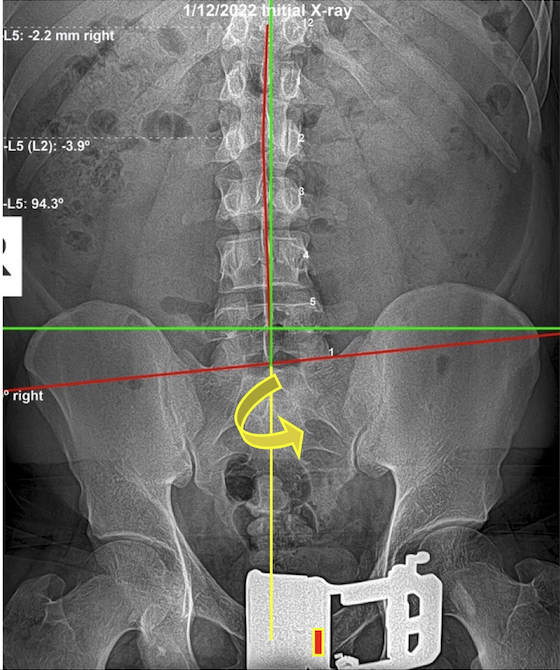
His initial film showed a significant pelvic rotation. His sacrum, the base of the spine, was twisted to the left and sinking on the right. His center of gravity did not line up with the front of his pelvis, where it should. That is a biomechanically flawed foundation, and it was creating stress up the spine, irritating his nerves, and producing his pain. This particular presentation is known as an AI Sacrum, for anterior and inferior. This sacral presentation has been found to occur in all significant disease processes, including heart, lung, and digestive disorders.
The Plan — A Royal Palm Beach Pelvic Correction Case
I recommended a six-month plan to start his correction and see how we needed to progress, given the physical and emotional stress of his work. He had been adjusted before, here and there, but never with a plan or any regularity, and he never saw the benefit. This time was different. His work schedule stretched the six months into nine, which affected how much correction we could get, but even so, his quality of life improved dramatically under regular corrective care.
Clinical Findings — Initial Examination
Patient: 31-year-old male, law enforcement officer
Presenting complaints: Moderate to severe, chronic mid and low back pain
Occupational stress: Long hours seated in a patrol car, in body armor and a loaded service belt
Primary structural finding: AI Sacrum (anterior and inferior) with significant pelvic rotation
X-ray type: AP lumbar and pelvis
Care plan: Six-month plan, extended to nine by his work schedule
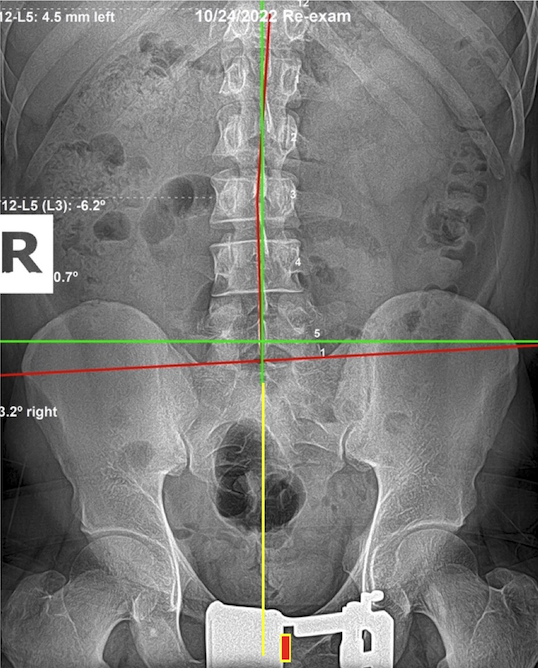
Lumbar & Pelvic AP — Initial & Re-Evaluation
What Changed Over Nine Months
His follow-up films show a dramatic improvement in his pelvic alignment, and correcting the foundation had a straightening effect on the rest of his spine as well. His pain is no longer as frequent or as intense as it was. His quality of life is dramatically better than when he started. I am confident we could have gotten even more correction if his schedule had let him keep the recommended frequency, but even with the interruptions, his own innate intelligence made the changes his body needed and gave him a better quality of life.
Why the Plan Mattered
His earlier experience is worth sitting with. He had been to chiropractors before and gotten adjusted now and then, and it never did much for him. The difference this time was a plan: specific correction, applied with regularity, aimed at changing the structure of his spine. A twisted foundation does not come back to center on the occasional visit. It takes consistent, corrective work, and that is what finally moved his.
Your Job May Be Working Against Your Spine
If your work keeps you seated for hours — in a patrol car, a truck, or a desk chair — your spine and pelvis are paying for it. Come in for a full structural X-ray analysis and find out what that daily stress has done to your foundation.
Schedule a Structural EvaluationOr call us at (561) 795-3156
Have you ever had your spine checked for subluxation?
Related: Another pelvic-foundation case — an equestrian's low back.