By Dr. Romar Rochet, D.C. — 20+ years subluxation-based family chiropractic care. Every Correction Spotlight documents a real patient from this office.
How She Arrived
To close out the year, I want to feature a 52-year-old woman who came to us in excruciating low back pain. She is an elementary school teacher, so her days are spent bending, reaching, and holding the kind of awkward postures that stress a spine for hours at a time. The deeper problem, though, was in her knee. A meniscal injury had changed her gait and forced her to compensate, and because of the knee she could not exercise, which only made her low back worse. She was referred to us by Ed Cordero, my mentor and previous chiropractor, a man I deeply respect.
How a Knee Ends Up in the Low Back
When a knee is damaged, the body reorganizes around it. She had been walking differently for a long time to protect the knee, and that altered gait travels straight up into the pelvis and spine. Over time, the compensation settled into her structure. On her films, her pelvis had rotated to the left and her sacral base had dipped down on the right, a presentation known as an AI Sacrum, for anterior and inferior. In her case, the knee played a major role in the compensatory changes we saw in her pelvis.
A Response I Rarely See
Her very first adjustment left her almost completely out of pain, and it did something I did not expect. It nearly restored her knee's normal function and motion. That kind of response on day one is uncommon, and it told me her body was ready to change if we gave it the chance.
The Plan — A Royal Palm Beach Pelvic Case
We had high hopes, and I recommended a six-month plan to correct her spine. Life happened, as it does, and her six months became nine. I cannot stress this enough: frequency matters. The longer you draw out a correction plan, the longer the spinal changes take. She still did well, but she would have gotten there faster on the recommended schedule.
Clinical Findings — Initial Examination
Patient: 52-year-old female, elementary school teacher
Presenting complaint: Excruciating low back pain
Complicating factor: Meniscal knee injury altering her gait; unable to exercise
Primary structural finding: AI Sacrum (anterior and inferior) with pelvic rotation to the left
X-ray type: AP lumbar and pelvis
Care plan: Six-month plan, extended to nine
Lumbar & Pelvic AP — Initial & Re-Evaluation
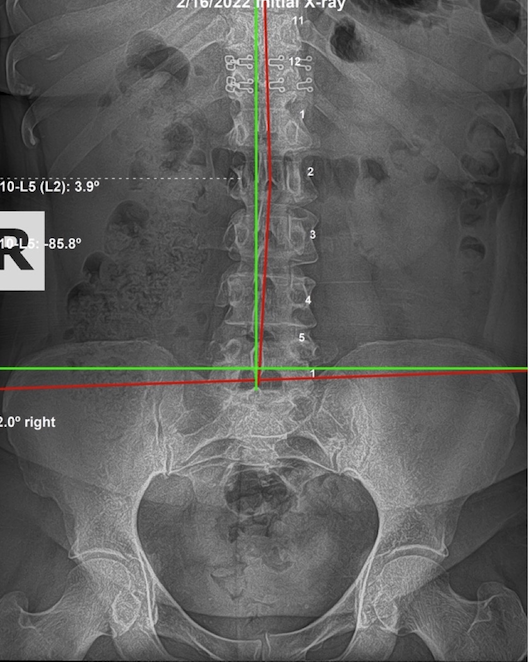
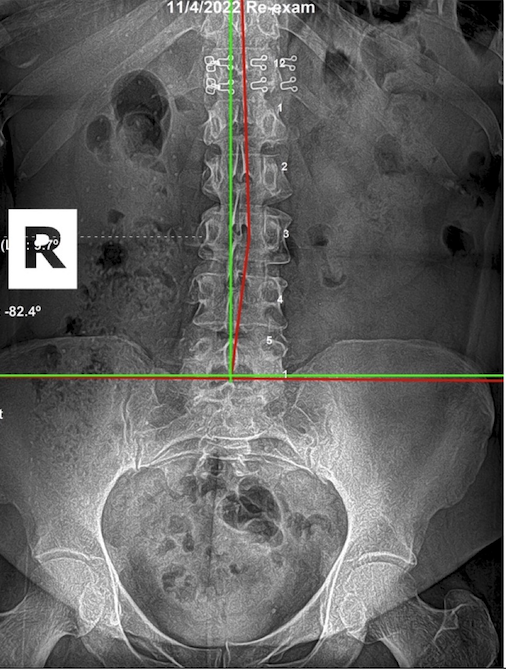
Her follow-up films show a dramatic improvement in her pelvic alignment. The lumbar spine looks about as vertical as before, but that appearance is deceiving; it reflects how much compensation she had been carrying before the pelvis was corrected. Her lumbar curvature also improved, which matters for the pressure on her nerve roots.
What Changed
From a quality of life standpoint, her pain resolved completely and she was able to return to exercise. The pelvic correction also had a positive effect on her knee. I am confident we could have gotten even more correction if she had kept the recommended frequency of care, but even with the interruptions, her own innate intelligence made the changes her body needed and gave her a better quality of life.
Closing Out the Year
Her case is a fitting one to end the year on, because it shows how connected the body really is. A problem in a knee became a problem in a spine, and correcting the spine helped the knee in return. I am not the healer. I move the bone; God does the healing. You are a self-healing organism, and when you are subluxation free, not only does your spine heal, but your body expresses life the way you were created to do. Get checked often. Get adjusted when necessary. Stay healthy.
Your Back Pain May Be Starting Somewhere Else
Pain in one place often begins in another — a knee, a hip, or an old injury your body has been compensating for. Come in for a full structural X-ray analysis and find out where your problem actually starts.
Schedule a Structural EvaluationOr call us at (561) 795-3156
Have you ever had your spine checked for subluxation?
Related: Another AI Sacrum case — a law enforcement officer's twisted pelvis.