How He Arrived
This month I want to feature a 24-year-old man who came to us with severe neck pain, upper back pain, and headaches. His situation was complicated by a mild-to-moderate scoliosis, less than 30 degrees. He had been to other chiropractic offices looking for relief, and on a few occasions he left worse off than when he started. A spine with scoliosis has to be handled with care, and not every approach accounts for that.
The Neck and the Curve Were One Problem
His neck pain and his scoliosis were not two separate problems. The spine works as one connected chain, from the top of the neck down to the pelvis. A curve in the mid and low back changes how the whole column stacks and balances, and the neck at the top has to compensate for what is happening below it. I approached his whole spine as the single kinetic chain it is.
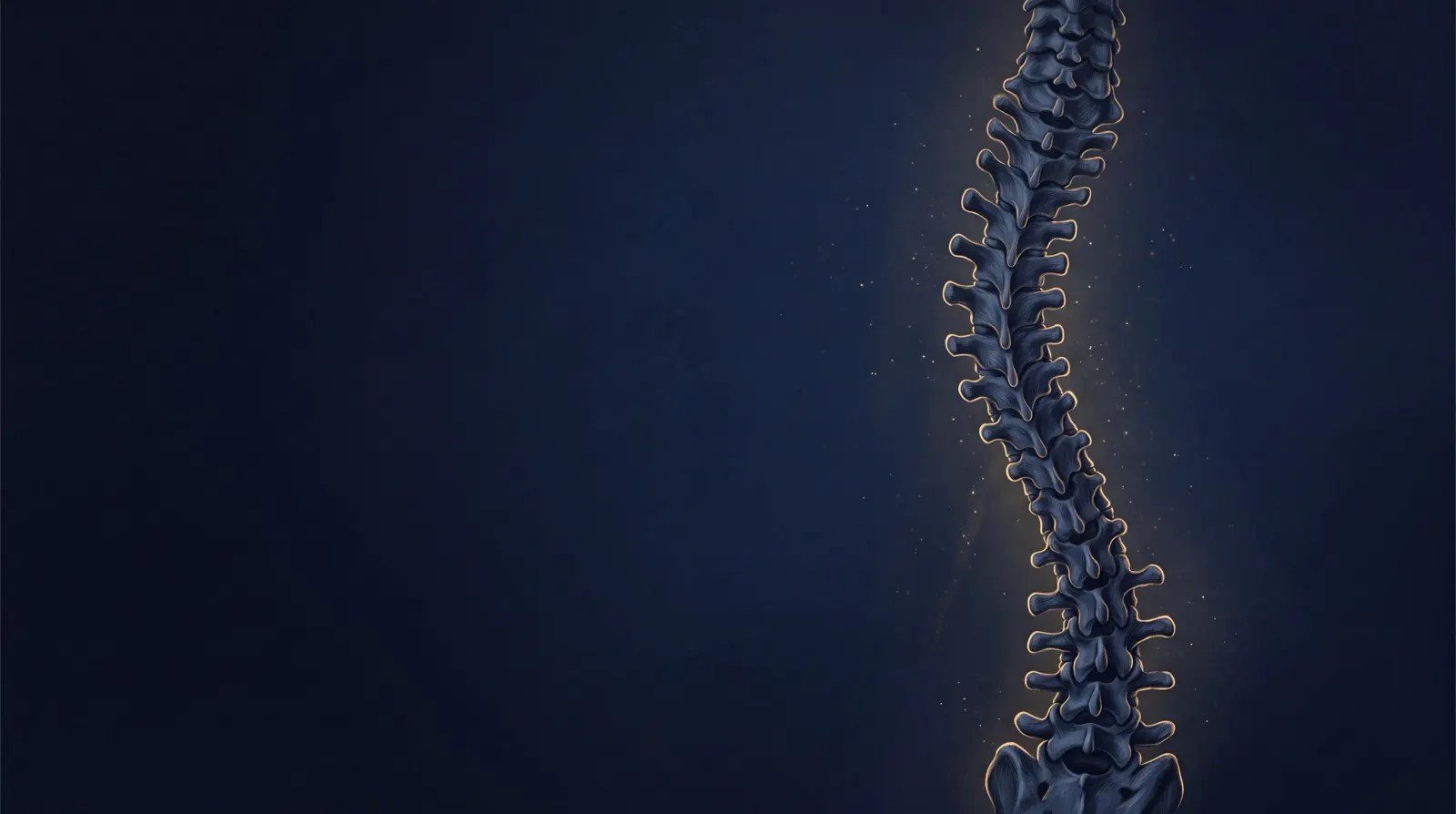
A scoliotic spine is always compensating. To keep the eyes level and the body upright, it bends one way and counter-bends another, and the muscles work unevenly to hold it together. That constant compensation is felt all the way up the chain, including in the neck and head, and it was part of the picture that brought him in.
The Plan — A Royal Palm Beach Case
Our initial care recommendation was a six-month correction program. During that time I delivered specific adjustments to correct the subluxations in his spine, where and when he was subluxated. His scoliosis changed how I worked. I was careful not to put manual adjustments into the concavities of his curves, because pushing into a curve can aggravate it. For the subluxations in his mid and low back, I used a drop-table method called Thompson Drop, which corrects the subluxation without forcing the curve.
Clinical Findings — Initial Examination
Patient: 24-year-old male
Presenting complaints: Severe neck pain, upper back pain, and headaches
Complicating factor: Mild-to-moderate scoliosis (less than 30 degrees), mid and low back
History: Prior chiropractic care elsewhere, left worse off on a few occasions
X-ray shown: AP cervical (neck)
Technique for the curves: Thompson Drop (drop-table), no manual adjusting into the concavities
Care plan: Six-month correction program
AP Cervical — Initial & Re-Evaluation
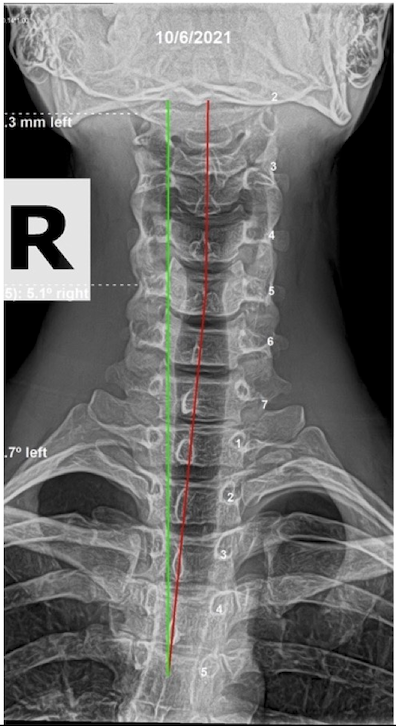
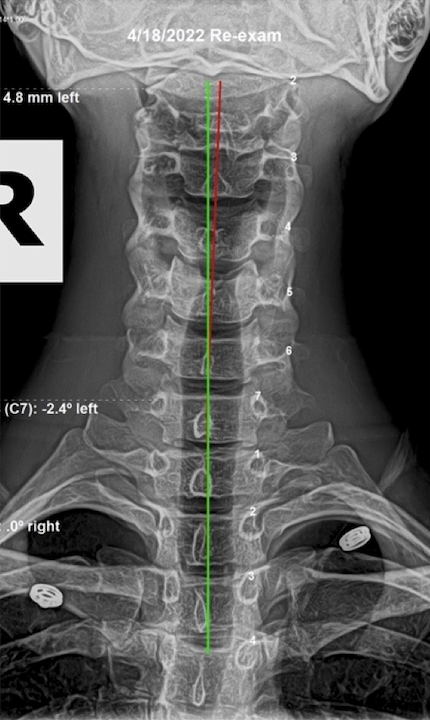
The films above are his AP cervical views, showing the correction in his neck alignment over the six months. His scoliosis sits lower in the spine, in the mid and low back.
What Happened Under Care
Over the six months, he got his life back. His neck pain, upper back pain, and headaches resolved completely, and he returned to exercising, which his pain had kept him from.
Then something happened that was never the intent of his care. As I corrected his subluxations and his body regained control of itself, the severity of his scoliosis came down. I did not set out to change his curve. My work was subluxation correction, visit by visit. The environment that correction created was enough that his body, his Innate intelligence, improved the curve on its own.
A Word on Scoliosis
Scoliosis has many known factors — genetics, growth, and others — and it is mostly idiopathic. Subluxation does not cause it. Be careful of anyone who promises to straighten a curve out completely. My opinion, and it is an opinion, is that subluxation correction improves quality of life and may slow or stop a curve's progression, and in some cases scoliotic spines have improved under conservative care. Bracing, physical therapy, and surgery all have their place, and this kind of care runs alongside them, not instead of them. His case is one where the severity came down.
He came to us worn down and worse off from care that had not accounted for his scoliosis. He left exercising again and out of pain, with a spine that was handling his life better than when he walked in.
Scoliosis Deserves a Careful, Specific Approach
If you have scoliosis, or you have been left worse off by care that did not account for it, your spine deserves a careful structural evaluation. Come in for a full X-ray analysis and a plan built around your spine.
Schedule a Structural EvaluationOr call us at (561) 795-3156
Have you ever had your spine checked for subluxation?
Related: Our approach to scoliosis care