What scoliosis actually is
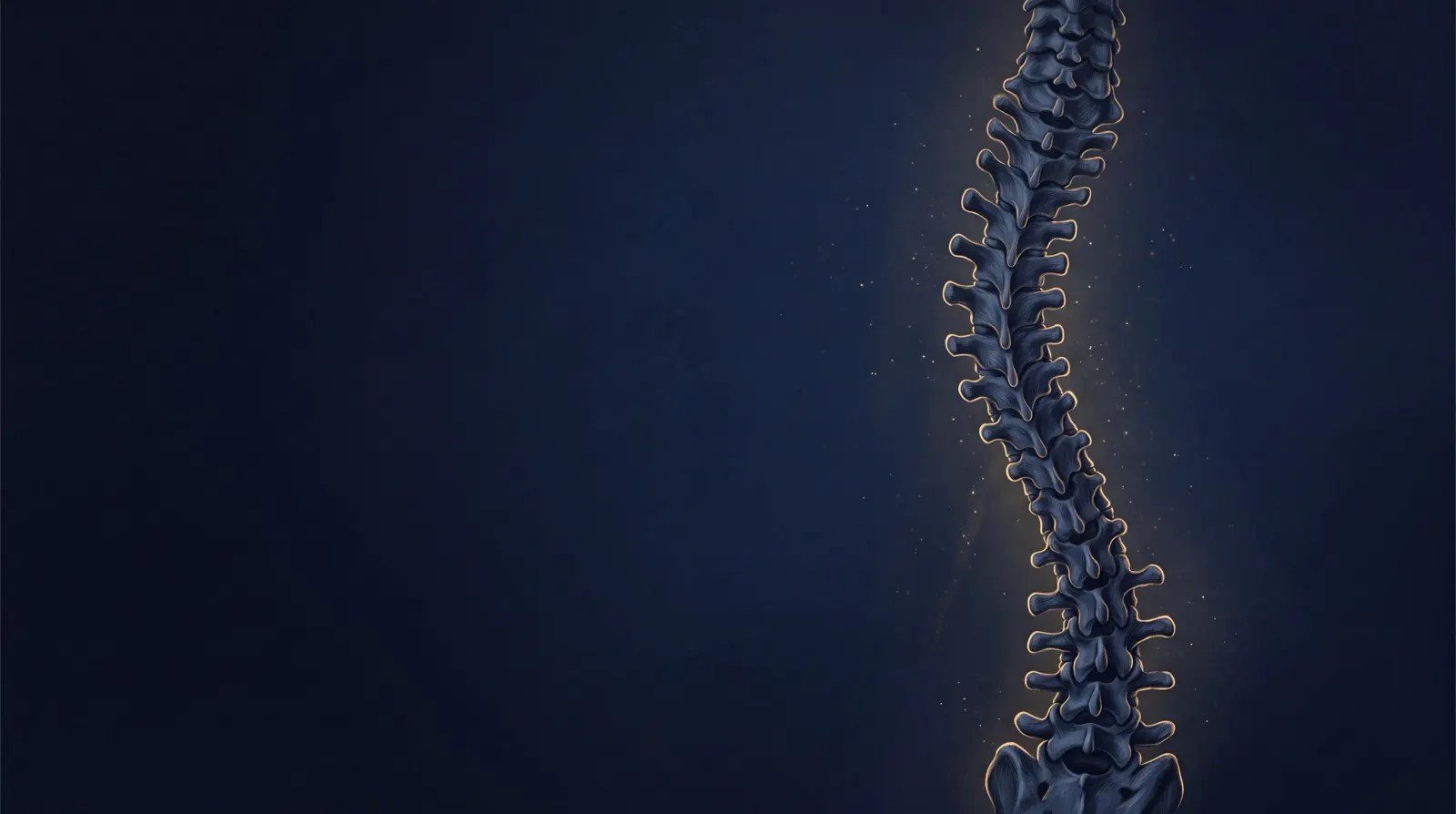
Scoliosis is a sideways curve of the spine. Instead of stacking straight down the back the way it should, the spine bends off to the side into a C or an S, and the vertebrae along that curve rotate as they go. The Scoliosis Research Society puts it at about 2 to 3 percent of adolescents. In most cases it is called idiopathic, which is the medical term for a curve that developed without a known cause.
Scoliosis develops from a number of factors — genetics, rapid growth during adolescence, and certain neuromuscular and connective-tissue conditions among them — and in most cases the specific cause is never identified. Vertebral subluxation is a separate matter. Subluxations are found in straight spines as well as scoliotic ones, and in a spine with a curve they may sit within it, above it, or below it. Wherever they are, they affect how the spine moves and how the nervous system functions, and that is what subluxation-based care is concerned with.
The curve isn't the whole story
A scoliotic spine does not only lean to one side, it also twists. As the vertebrae rotate through the curve, the joints load unevenly, and that changes how the whole spine carries weight and moves through the day.
We care about the curve itself. The reason to take films of a scoliotic spine is to measure it (the angle and rotation, in degrees and millimeters) — to know exactly what you are working with, and to see whether it is improving over time under care. A curve that is left alone can progress, especially during the growth years, so watching it matters.
And we care about the subluxations, wherever they sit. Correcting them is intended to improve how the spine moves and to reduce nerve interference, so the nervous system can express function the way it was designed to. That work matters in any spine, curved or straight.
The purpose of care is to improve the spine's biomechanics and neurological integrity, have a positive impact on alignment, and work to interrupt the curve's progression.

Where chiropractic fits in
Medical management of scoliosis usually means one of three things: watching the curve with periodic films, bracing it during the growing years, or, in the more severe cases, correcting it surgically with fusion. Those approaches have their place. For a severe or rapidly progressing curve, an orthopedic surgeon should be involved.
Chiropractic brings a different focus to the same spine. We look at how it moves and how the nervous system is functioning, and we correct the subluxations we find, whether they sit within the curve, above it, or below it. A braced spine, and even a fused one, can still carry subluxations that affect how the nervous system works.
This is not one approach against the other. We approach a scoliotic spine from an adjunctive, supportive position — not a replacement for medical care, and not exclusive of it. There are times when bracing, physical therapy, or surgery are needed and provide real benefit, and subluxation-based care can run alongside them. For a lot of the families I see, it does.
What the care is working toward
Scoliosis can progress, especially during the growth years, and that progression is understood to involve several known factors rather than any single one. Subluxation-based care does not claim to control all of them. What it works on is the part it can address: how the spine moves, and the integrity of the nervous system running through it.
So the purpose of care is straightforward: to improve your spinal biomechanics, to improve your neurological integrity, to have a positive impact on your spinal alignment, and to work at interrupting the progression of the abnormal curvature — all while recognizing the other known factors behind scoliosis.
Our opinion, from years of caring for spines like these, is that subluxation correction improves Quality of Life and may slow or stop a curve's progression — and in some cases, scoliotic spines have improved under conservative care. Peer-reviewed case series from the CLEAR Scoliosis Institute have documented reductions in scoliotic curves using conservative, chiropractic-based methods. Be careful of anyone who promises to straighten a curve out completely.
Scoliosis has more than one factor behind it, and no single kind of care controls all of them. What subluxation-based care works on is the spine's function — its biomechanics and neurological integrity — while working to interrupt the progression of the curve.
Every scoliosis is different
There is no single scoliosis protocol that fits everyone, and I would not hand you one before I have seen your spine. Every curve is different and every spine is different, so what I recommend depends on the person in front of me — their age, how long the pattern has been there, and how the curve has been behaving.
What does not change is the standard: care specific to your spine, with the goal of seeing it improve.
Caring for a curved spine over time
A scoliotic spine is not something you correct once and then forget about. Think of it the way you think of a retainer after braces. The curve gives that spine a standing tendency to shift and lock back up, so periodic checking and correcting helps keep the subluxations from stacking back on top of each other and the nerve interference from creeping back in.
This is not a lifetime of visits for their own sake. You were given one spine, and it was designed to express health and function fully. A spine that carries a curve simply needs attention over the long haul, and keeping it moving and free of interference is a large part of taking care of it well.
Serving Royal Palm Beach, Wellington & nearby
People drive in from Wellington, Loxahatchee, West Palm Beach, and right here in Royal Palm Beach for subluxation based, structural care. If you or your child has been given a scoliosis diagnosis, the question worth asking is the same one we would ask about any spine: Have you ever had your spine checked for subluxation?
A lot of the families I see have already been through the orthopedic route, the brace, the monitoring, the annual films, and they are looking to add a focus on how the spine itself is functioning. That is where I start.
- Full structural X-ray analysis included with your initial new patient visit
- Care specific to your spine, never a template
- Aimed at improving spinal biomechanics and neurological integrity, with the goal of interrupting the curve's progression