
Why neck pain and headaches are the same problem
Neck pain and headaches are two of the most common reasons people come to see me, and after more than twenty years I can tell you they usually start in the same place. Your top seven vertebrae make up the cervical spine, and they protect the nerves that run to your head, neck, shoulders, and arms. When one of those vertebrae shifts out of its normal position, it puts interference on those nerves. That is a vertebral subluxation. Your body feels it as stiffness, tension, and the kind of headache that keeps coming back.
Everyday life only speeds it up. Hours looking down at a phone. A workday spent bent over a desk. An old accident you stopped thinking about years ago. Each one pulls the neck away from its proper curve, and when the subluxation goes uncorrected the spine keeps building on that bad position. The ache you used to ignore becomes part of your normal day.
"Pain is your body telling you something is wrong underneath. Cover it with medication and the problem is still there, quietly getting worse."
The structural cause: cervical subluxation
A vertebral subluxation is a vertebra that has lost its normal position and is interfering with the way your brain and body communicate. In the neck, that interference tends to show up in a few predictable ways:
- Nerve irritation that sends pain into the neck, down the arm, or shows up as numbness
- Tight, guarding muscles around the vertebra that is out of place
- A neck curve that flattens or reverses, putting extra load on the discs
- Irritation at the base of the skull that refers pain up into the head
- Pressure on the artery that carries blood up through the neck
The cause is structural, so the answer has to be structural too. Medication quiets the nerve down. It does nothing about what is pressing on it.
How chiropractic impacts neck pain
In my office, correction starts by looking at your actual spine. We take cervical X-rays so I can see exactly where each vertebra sits, how much of your neck curve is left, the condition of the discs, and which levels are subluxated. That detail matters. Put the right correction into the right vertebra and the structure changes in a way we can measure. Adjusting a neck without ever looking at it is guessing, and I will not do that to you.
From there, correcting the subluxation takes a real plan over time, a lot like straightening teeth with braces. It takes the right pressure in the right direction, and it takes patience. Follow-up X-rays let you see the change on film for yourself, so you are never just taking my word for it.
Your neck does far more than turn your head. The nerves passing through your cervical spine help run your heart, your immune system, and your body's God-given ability to regulate itself. Correcting subluxation here restores the connection between your brain and the rest of you, and that is where real health expression begins.
Chiropractic and headaches
A lot of recurring headaches start in the upper neck. The top two vertebrae, the atlas and the axis, sit right where the nerves at the base of your skull come through. When they are subluxated, they refer pain up into the head that can feel exactly like a tension headache, and for some people like a migraine.
Correct the subluxation up there and the irritation settles, and the headaches usually go with it. We are not masking how you feel. We are removing what caused it.
Patient case: cervical & lumbar correction
31-Year-Old Aesthetician
This patient spends eight hours a day or more leaning forward over clients. That posture had flattened and reversed the curve in her neck, and the pressure it put on her nerves left her with severe neck pain, headaches, and nights she could not sleep. Finishing a shift had become a struggle.
Her X-rays told the story: a reversed neck curve, her head carried forward of her shoulders, and a loss of curve in her low back as well. The before and after films below show what changed once she committed to a correction plan.


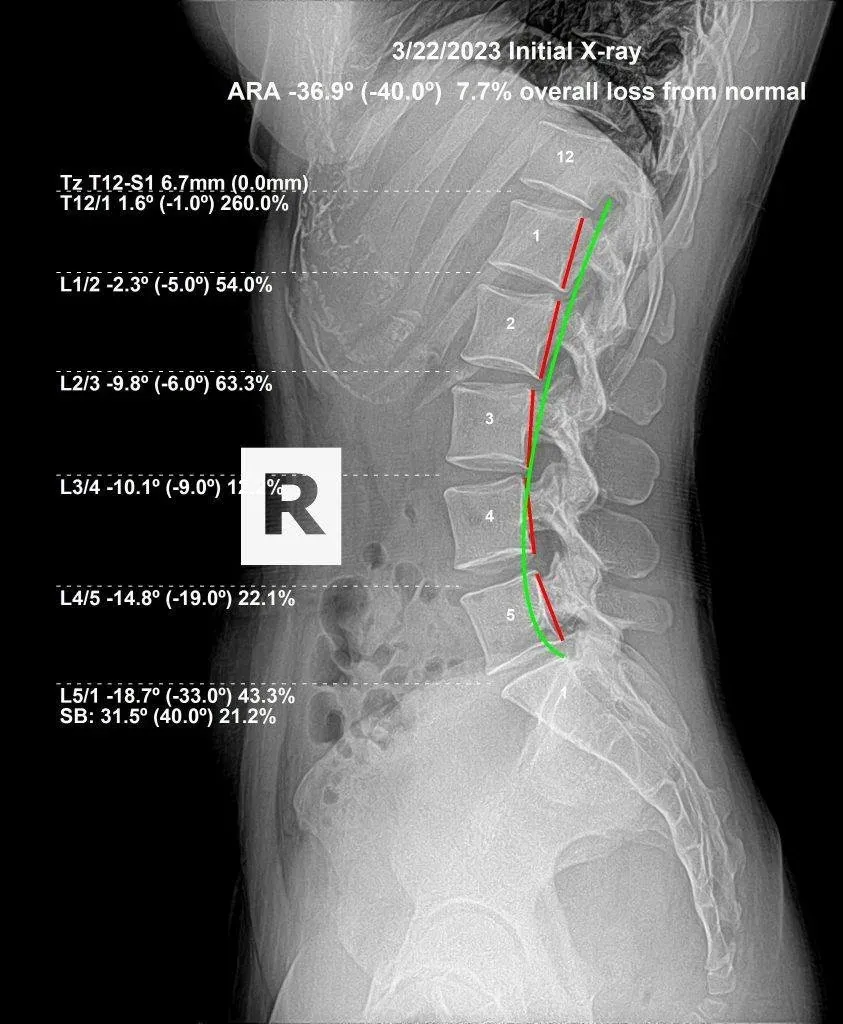
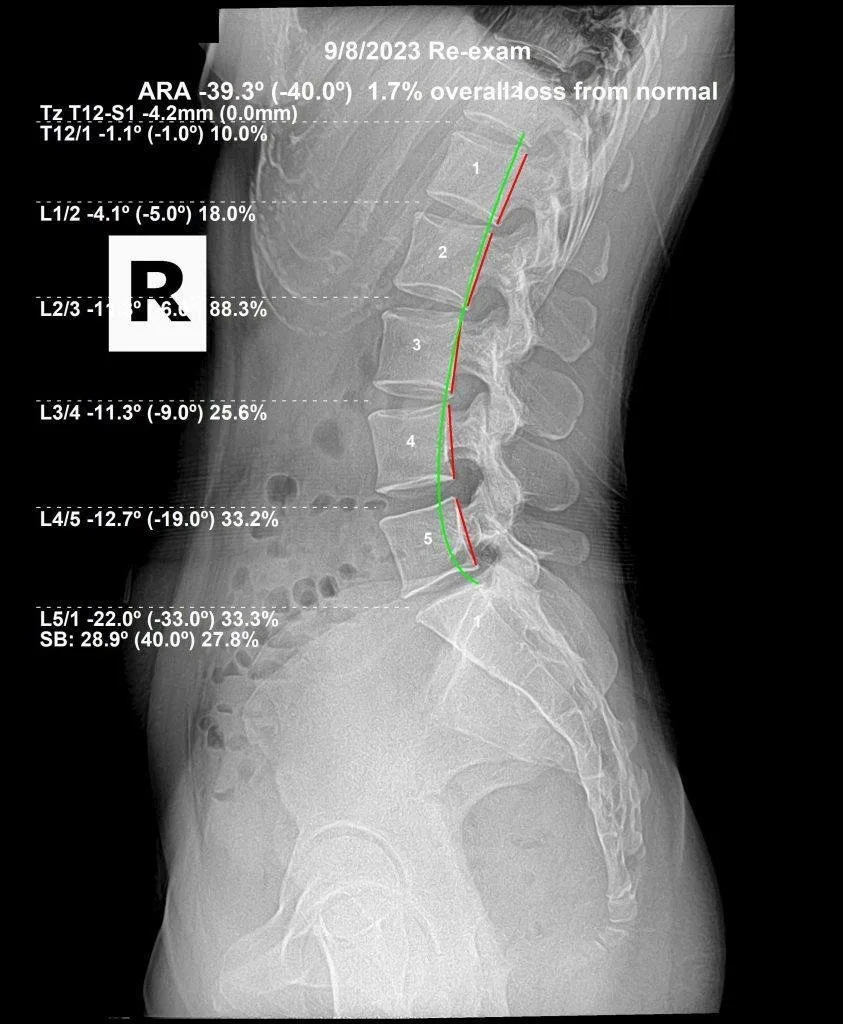
Actual patient X-rays. Results vary individually.
Choosing the right chiropractor for neck pain
Not all chiropractic is the same, and you deserve to know the difference. Plenty of offices adjust to chase the pain, quiet the symptom, and send you on your way. The trouble is that when the visits stop, the subluxation is still there, and so is the problem.
Subluxation-based chiropractic works differently. The whole point is to find the exact vertebra causing the nerve interference, correct it specifically, and follow the structure over time with X-rays. The goal was never to manage how you feel. It is to correct the spine.
So when you are choosing someone for your neck, ask them a few honest questions. Do they take X-rays? Do they have a specific plan to correct what they find? Do they re-check the structure to prove it actually changed? If the answer is no, you are getting symptom care, not correction.
Long-term prevention
Correcting the subluxation is the start, not the finish. Once your spine is holding its proper position, staying under regular care keeps it there and keeps the problem from creeping back. Good posture, some specific strengthening, a workstation that is not working against you, and at times a little traction to support the curve between visits all help hold the correction.
The goal is not to manage your neck pain for the rest of your life. The goal is to correct the spine, let your nervous system work the way it was designed to, and keep it that way.