How He Arrived
This month I want to feature a 47-year-old man, a veteran who served our country and carried some severe injuries out of that service, including injuries from parachuting. He came to us with a long list: severe neck pain, upper back pain, and headaches, pain and weakness down into his upper arms, and severe hip and low back pain with weakness in his right leg. All of it was taking a real toll on his quality of life and his daily activities. He was referred by one of our practice members who had been in accidents herself and had seen major benefit from structural correction in our office.
A Case I Was Not Sure About
When I looked at the shape his spine was in, I had real doubts. His initial films showed the effects of years of injury, and the misalignment at the top of his neck was some of the most significant I see. My recommendation was a three-month correction program, and going in, I genuinely did not know whether we could move his alignment or his quality of life in a meaningful way. I told him that. A spine like his does not come with guarantees.
Why Old Injuries Still Matter
Injuries do not always resolve the way we assume. A hard parachute landing, a car accident, a fall — the body handles the acute damage, but the structural changes can stay in the spine for decades. The alignment shifts, the nervous system adapts around it, and the person learns to live with a new normal that is quietly getting worse. Years later, the neck pain, the arm weakness, the bad hip, and the leg that does not fire right can all trace back to trauma the person had almost forgotten. His body had been compensating around old injuries for a long time.
The Plan — A Royal Palm Beach Case
We started with the three-month correction program. During that time I delivered specific adjustments to correct the subluxations in his spine, only when and where he was subluxated. Given everything his spine had been through, I kept my expectations measured and watched closely for how his body would respond.
Clinical Findings — Initial Examination
Patient: 47-year-old male, military veteran
Presenting complaints: Severe neck, upper back, and headache pain; pain and weakness into the upper arms; severe hip and low back pain with right leg weakness
History: Severe service injuries, including parachuting injuries
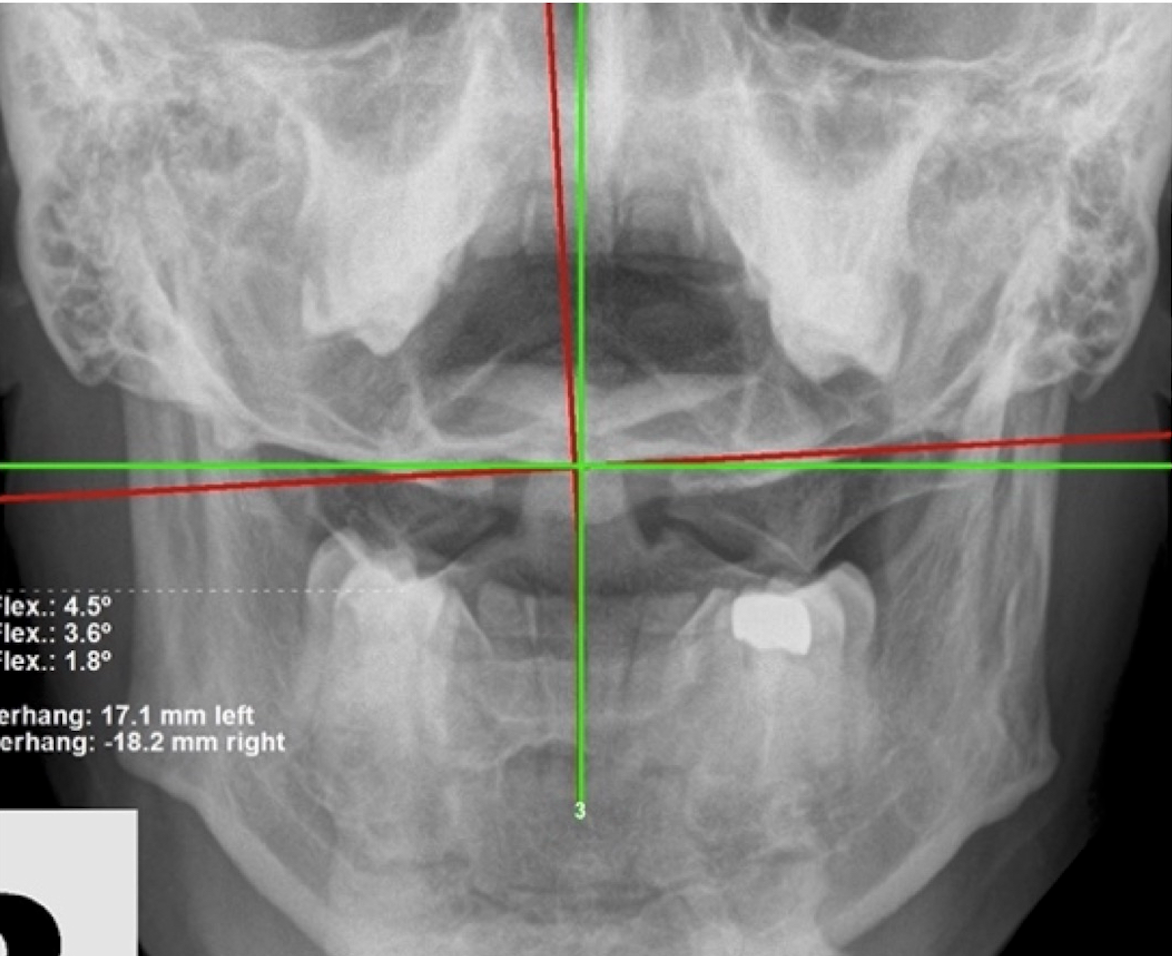
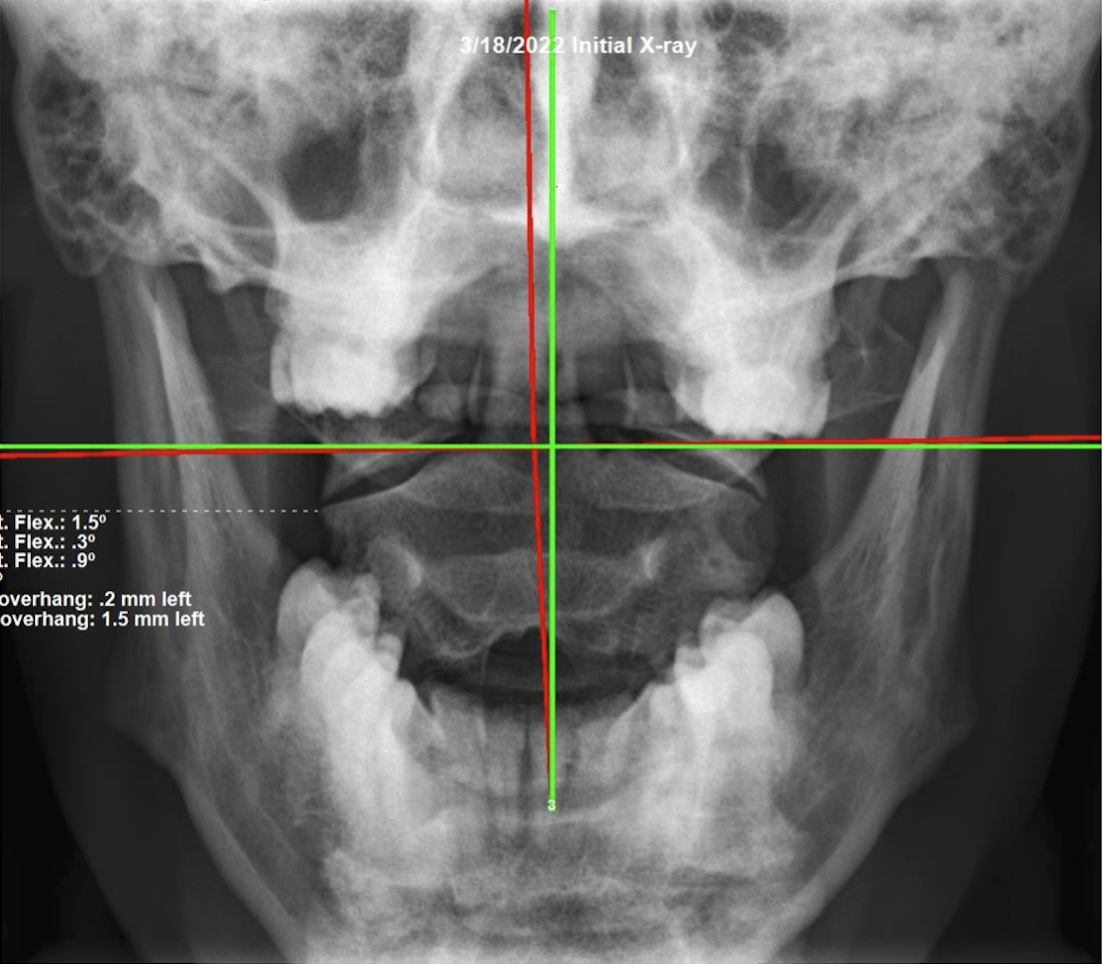
X-ray type: APOM (anterior-posterior open-mouth) upper cervical
Primary structural finding: Significant Atlas (C1) subluxation with large lateral overhang (17.1mm)
Care plan: Three-month correction program, then continued for another six months
Upper Cervical APOM — Initial & Re-Evaluation
One Nervous System, Head to Toe
His complaints ran from his head to his right foot, and there is a single reason for that. The spine houses and protects the nervous system, and every nerve in the body traces back to it. The nerves to his arms leave the spine in his neck. The nerves to his hip and leg leave it in his low back. When subluxation interferes with the nervous system at those levels, the effects show up wherever those nerves travel — which is why one man can carry neck pain, arm weakness, a bad hip, and a weak leg all at once. Correcting the subluxations along his spine gave his nervous system room to run those signals again.
What the Three Months Showed
By his re-evaluation, we had seen not only structural improvement, but significant improvement in his daily activities and his quality of life. Most of his body pains, his headaches, and the weakness into his arms and leg had resolved. For a spine I was unsure about at the start, that was a genuinely powerful result.
He decided he was not done. The change was enough that he chose to continue his corrective care for another six months, to see how far we can improve his alignment and his overall function and well-being. Praise God.
No Spine Is Automatically Too Far Gone
If injuries, age, or years of wear have you believing your spine is beyond help, find out before you accept that. Come in for a full structural X-ray analysis. Some of the most rewarding cases I see are the ones I was not sure about.
Schedule a Structural EvaluationOr call us at (561) 795-3156
Have you ever had your spine checked for subluxation?
Related: Another complex spine handled with care: neck pain, headaches, and scoliosis.