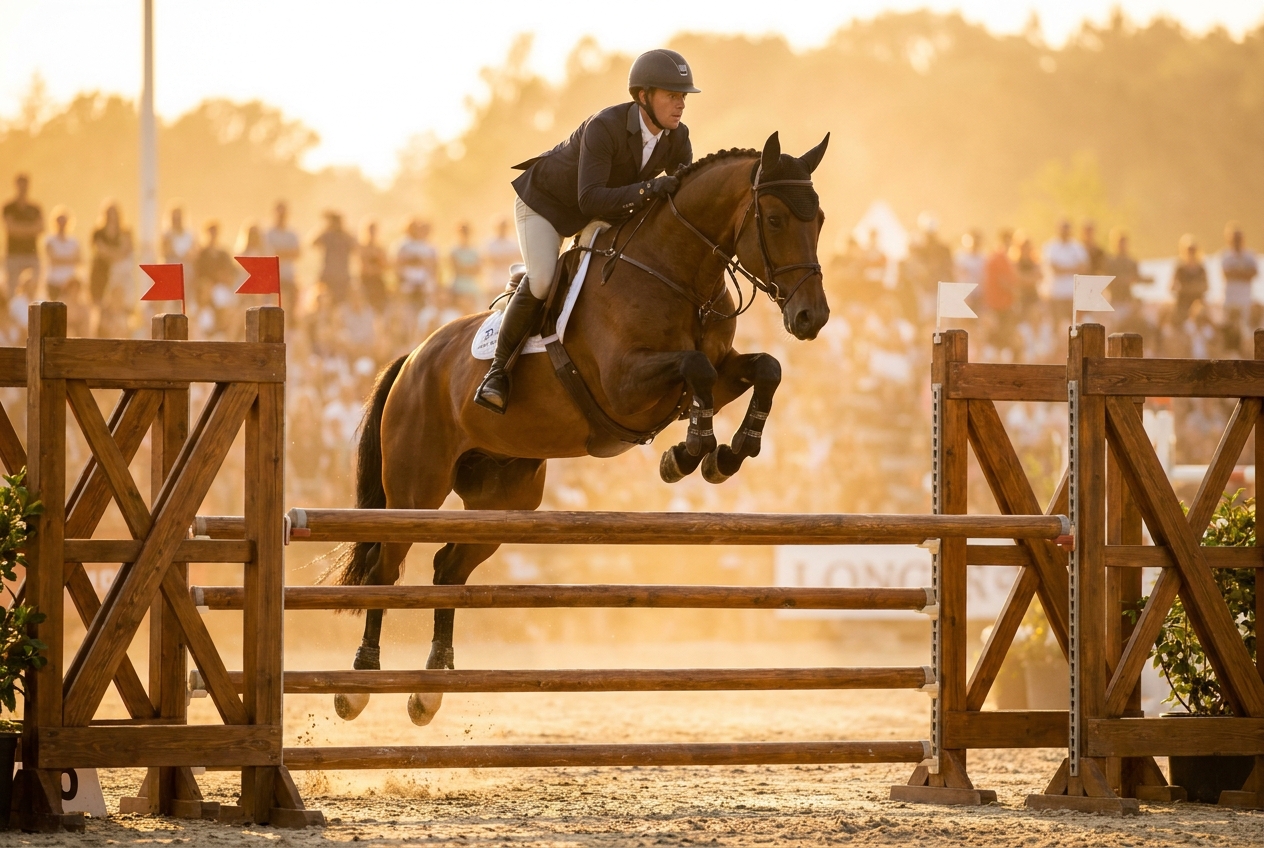
Every jump landing transmits compressive force through the pelvis and into the lumbar spine
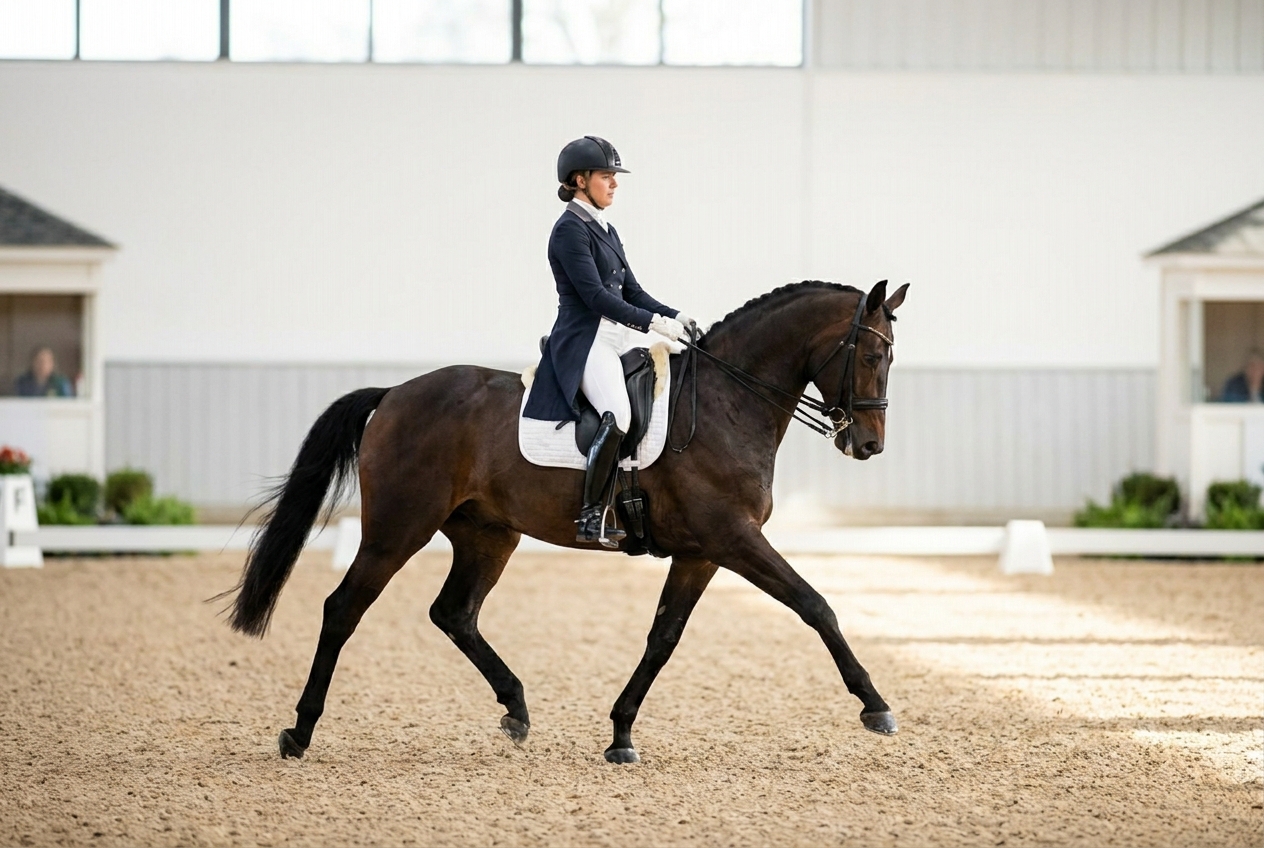
In dressage, a subluxated pelvis is a communication barrier — the horse feels it before the rider does
The equestrian spine under load
Wellington is one of the premier equestrian communities in the world, and the discipline it takes to compete at that level is extraordinary. But the physical demands of it — fall after fall, jump after jump, season after season — add up on the spine in a way most riders never deal with.
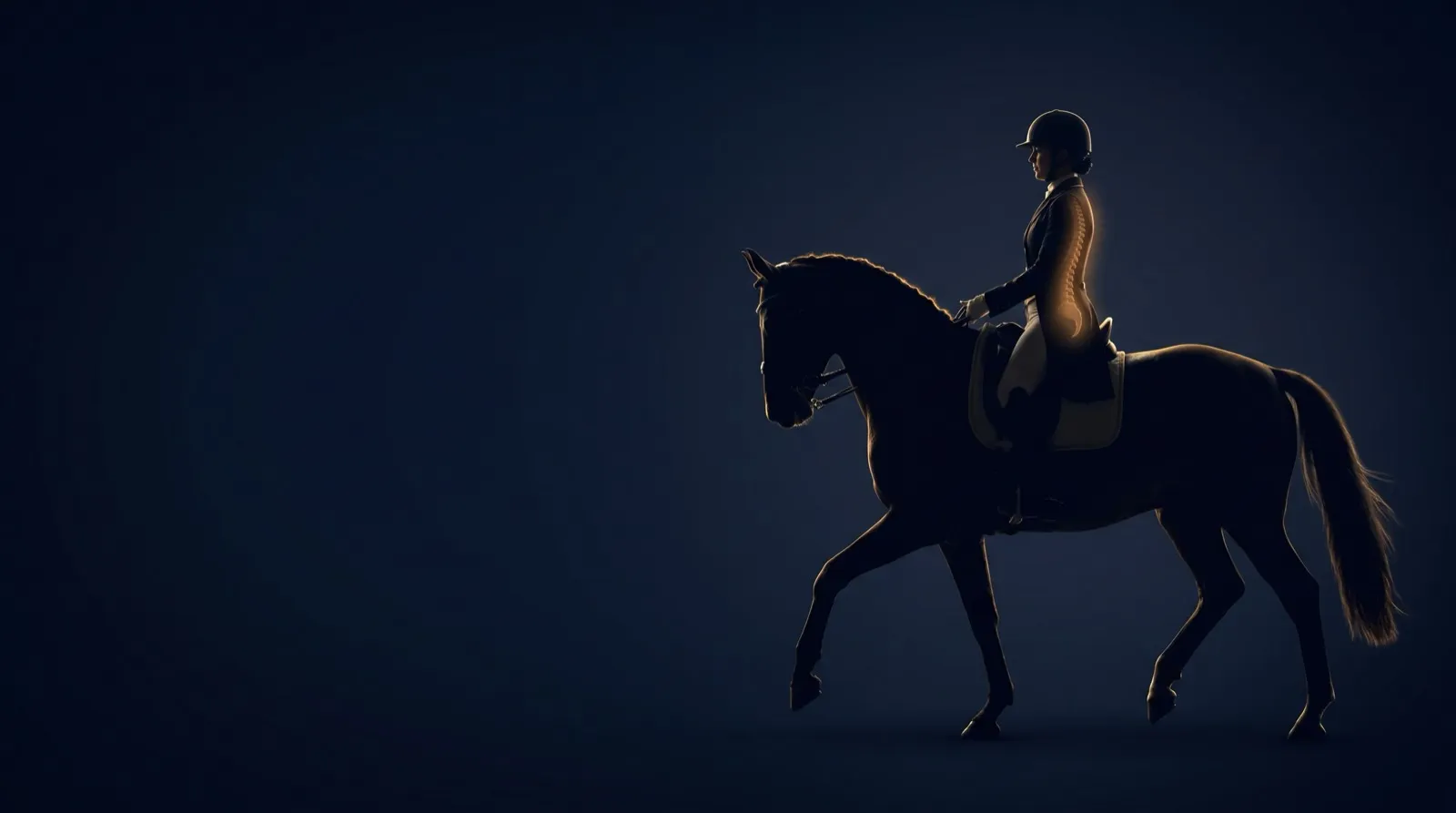
Whether you've come off a jumper hard, been unseated out of nowhere, or just ridden five or six days a week for years, your spine is absorbing forces it was never built to take without regular care. Those forces create vertebral subluxations — misalignments that change nerve function and get in the way of your body's ability to regulate, heal, and perform.
Falls aren't the only concern
Riders and trainers tend to focus on the acute stuff: the fall, the impact, the visible injury. But the repetitive mechanics of riding often do more long-term damage than any single fall. Think about every jump. The horse lands, and that force travels up from the hooves, through the horse, and into your pelvis and lumbar spine. Hundreds of repetitions later, that micro-trauma has built subluxation patterns that quietly wear down your spinal integrity and nerve function.
Pain management — the anti-inflammatories, the massage, the PT — deals with how it feels. It does not correct the structural damage underneath. The subluxations that form under equestrian trauma are some of the most stubborn I see, because they develop under repeated mechanical loading. Every ride reinforces the pattern.
Why subluxation-based correction is the right care for riders: because it corrects the structural misalignment at the root, restoring proper spinal mechanics and nerve communication. Think of it like a farrier balancing your horse's feet. When the foundation is right, everything above it works better. Same with your spine.
The pelvis and the seat
The seat is your primary communication tool, and subluxation disrupts it
In dressage and jumping both, your pelvis is your main point of contact and communication with the horse. A subluxated sacrum or ilium creates an asymmetry in how your pelvis moves, and the horse feels it immediately — often before you do. Uneven seat bones, restricted hip flexion, a locked sacroiliac joint: all of it turns into inconsistent aids, a crooked horse, and scores that don't reflect how good a rider you actually are.
Dressage: when the seat stops moving freely
Dressage asks your pelvis to follow the horse with perfect fluidity — absorbing the motion, channeling the energy, giving precise cues with each seat bone on its own. A subluxated pelvis can't do that. The movement gets blocked or asymmetric, it disrupts the horse's rhythm, and it kills the deep engagement the scores demand. A lot of riders grind away at their equitation for months when the real barrier isn't skill, it's structure.
The sacrum especially has to swing freely in all three planes during sitting trot and canter. Sacroiliac subluxation — extremely common in riders from the one-sided torque of posting trot and canter leads — locks that movement up and sets off a chain of compensations through the lumbar spine, the thoracic spine, and into the shoulder carriage that judges catch right away.
Jumping: the landing load and L4–S1
Jumpers take enormous compressive force on every landing — force that runs from the stirrups through the ankle, knee, and hip and straight into the lumbar spine and pelvis. Over time, even a textbook position can't fully protect the spine from that. L4–L5 and L5–S1 are the most vulnerable segments, and subluxation there doesn't just cause back pain and sciatic symptoms, it disrupts the proprioceptive feedback elite riders live on for feel, balance, and precision in the air.
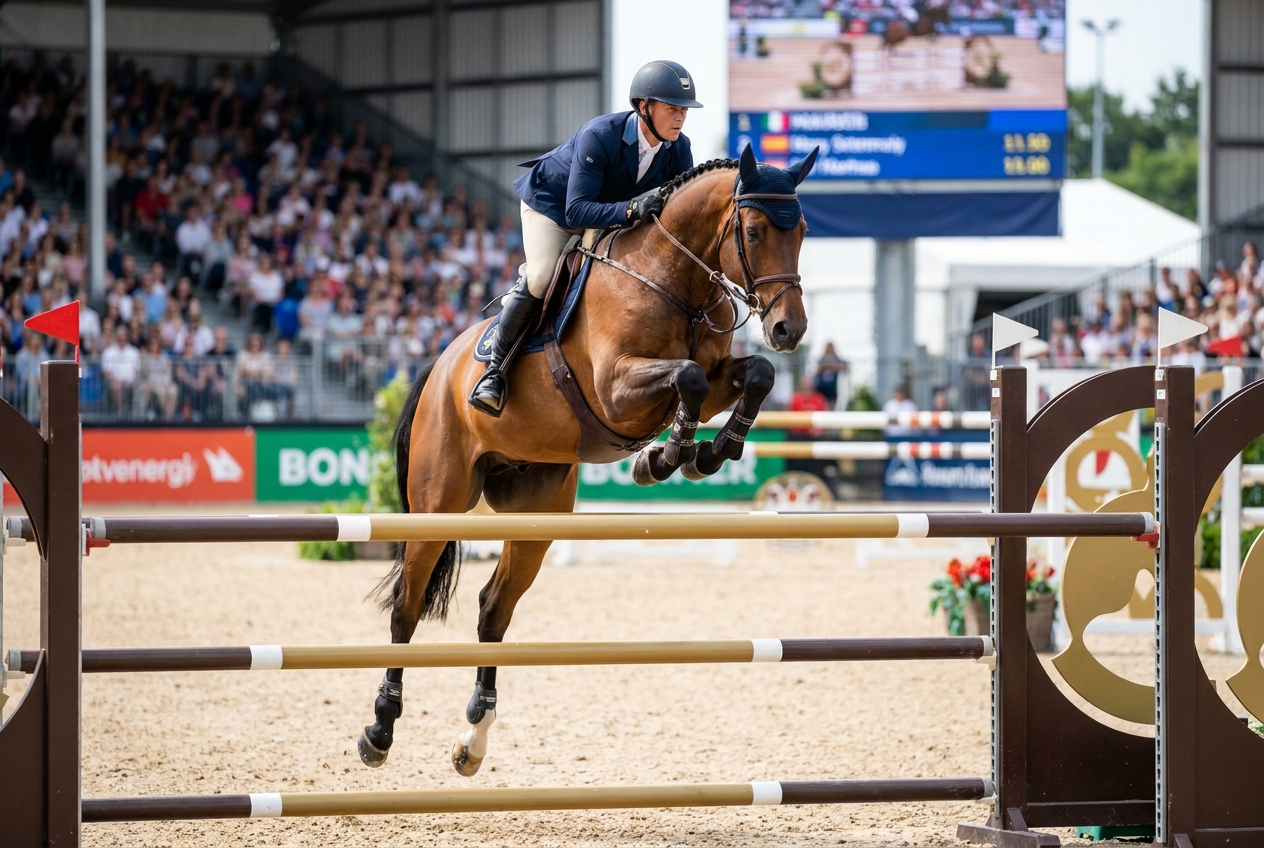
Every jump landing transmits compressive force directly into the lumbar spine and sacrum
What the X-rays reveal
Subluxation is a structural event, and it shows on X-ray. That's why I require spinal films before I start any care plan — not as a formality, but because you can't correct what you haven't precisely analyzed. The principle is the same whether the trauma came from a rear-end collision or a fall off a 17-hand Warmblood at a five-foot oxer.


Before and after X-rays from a trauma case — 13 degrees of cervical curvature restored. The principle of correction is identical whether trauma came from a vehicle impact or an equestrian fall.
These films are from a patient who'd taken significant spinal trauma. Through structural subluxation correction she gained 13 degrees of improved curvature and ended up with better cervical mobility than she had before the injury. When you take the nervous system interference away and restore the structure, the body's innate healing capacity is extraordinary — and it does not shut off just because someone is an athlete.
The case for maintenance care
You see your farrier every six to eight weeks whether or not your horse is lame. You don't wait for a problem. The same logic applies to your own structure. Regular subluxation correction belongs in every serious rider's maintenance program — not as a reaction to injury, but as a proactive investment in structural integrity, a clear nervous system, and a longer competitive career.
When your spine is aligned and your nervous system is clear, your body is far better prepared to absorb the loads of riding, recover between competitions, and communicate precisely through the seat. The riders who stay on top of their correction perform better, bounce back faster from the inevitable falls and strains, and ride well for longer.
Wellington is five minutes from my office on Royal Palm Beach Blvd, and I see equestrian athletes from across Palm Beach County. Call or fill out a new patient form to set up your first visit and spinal analysis.