
How She Arrived
This month I want to feature a 46-year-old woman who came to us with severe neck pain, upper back pain, and headaches. She is an entrepreneur, and her business keeps her in front of a computer screen for a large part of every day. That repetitive stress is the underlying cause of both the wear in her spine and the pain that brought her in.
How Repetitive Stress Wears on the Spine
People picture injury as a single moment — a fall, a car accident, a lift gone wrong. Most of what I correct is the opposite: the slow accumulation of the same posture, held for hours a day, year after year. Sitting at a screen keeps the head forward and the upper back rounded, and the spine adapts to that shape over time. That adaptation is not free. The joints, the discs, and the nervous system all pay for it, and eventually the body sends up the pain, stiffness, and headaches that finally get a person's attention.
The Plan — A Royal Palm Beach Case
Our initial care recommendation was a six-month correction program, with specific adjustments to correct the subluxations in her spine when and where she was subluxated. Real life did not pause for her care. Between vacations, family trips, business travel, and a few medical procedures, her plan stretched a few months past the six we started with. Even so, her alignment and her quality of life improved significantly.
Clinical Findings — Initial Examination
Patient: 46-year-old female, entrepreneur
Presenting complaints: Severe neck pain, upper back pain, and headaches
Underlying cause: Years of repetitive postural stress at a computer
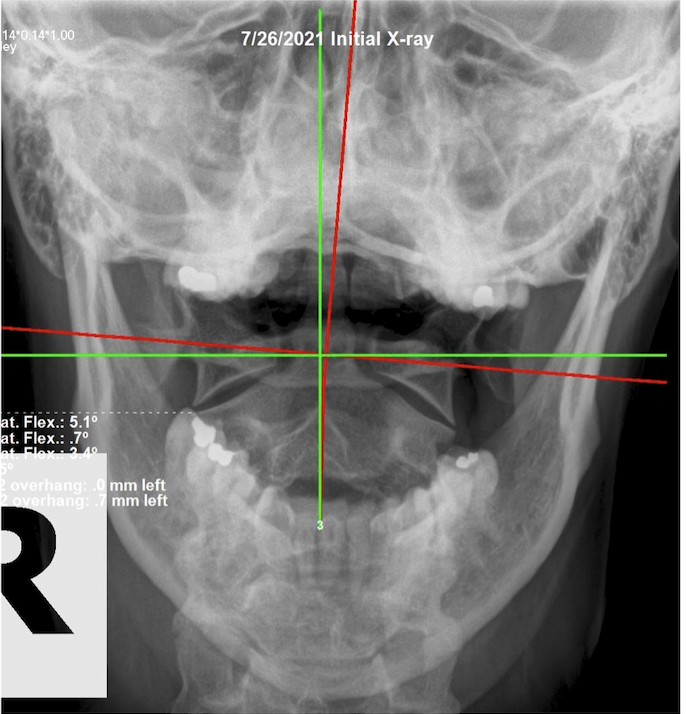
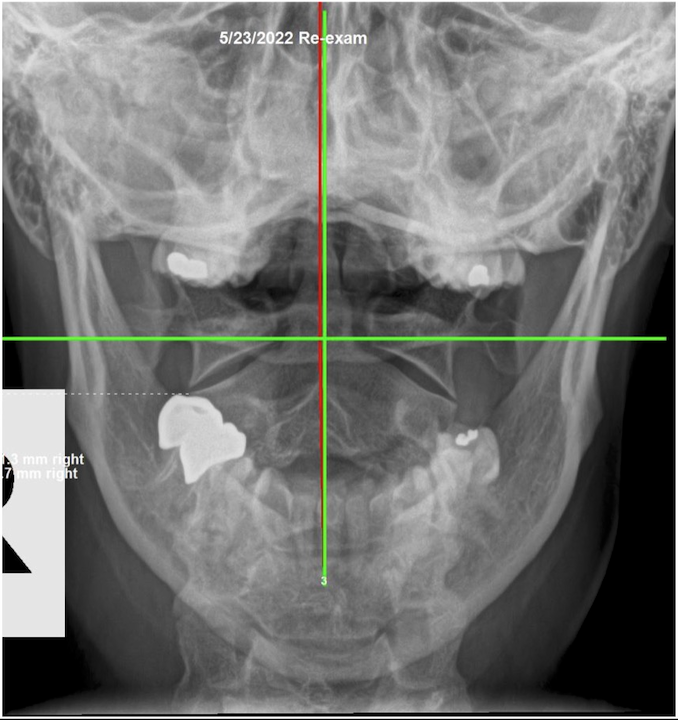
X-ray type: APOM (anterior-posterior open-mouth) upper cervical
Primary structural finding: Atlas (C1) subluxation with head tilt
Care plan: Six-month program, extended a few months by travel and life events
Upper Cervical APOM — Initial & Re-Evaluation
An Atlas Correction of This Magnitude
The films show a substantial correction of her Atlas, the top vertebra of the spine. The Atlas is where the head balances on the neck, and it sits closest to the brain stem, where the nervous system begins. A correction of that size, at that level, is a powerful, positive influence on her Innate intelligence — her body's own ability to run itself and express health. That is what showed up in her quality of life.
Real Life and a Real Care Plan
I want to say something about her care plan, because her story is a common one. She did not get through her six months in six months. She had vacations, family trips, and business travel, and a few medical procedures along the way. Life did not clear its calendar for her spine, and I would not expect it to. What matters is that she kept coming back to the work. Corrective care is not all-or-nothing. Consistency over time is what changes a spine, and it can survive a few interruptions as long as you return to it. Hers did, and her results came anyway.
What Is Still Ahead
There is still chronic change in her spine. Years of subluxation stress in various areas leave a mark that does not undo overnight, and hers is not fully undone. Her expectations, and mine, for further structural and functional improvement are high. Time is a factor in every process, but by God's grace, healing happens faster than breakdown.
I am not the healer. I move the bone; God does the healing. You are a self-healing organism, and when you are subluxation free, not only does your spine heal, but your body expresses life the way you were created to do.
Years at a Desk Add Up in Your Spine
If neck pain, upper back pain, or headaches have crept in from years at a screen, they did not appear overnight, and they are unlikely to leave on their own. Come in for a full structural X-ray analysis and find out what those years have done.
Schedule a Structural EvaluationOr call us at (561) 795-3156
Have you ever had your spine checked for subluxation?
Related: Another Atlas case, where the correction reached his low back and hips.