This patient came in carrying four complaints at once: headaches, pain radiating down into her legs, lumbar spondylosis — degenerative change in the low back — and dysmenorrhea, painful menstruation. Different systems, different labels, all present together.
What she came in with
Four complaints is a lot to hold, and she had been holding them as four separate problems: the headaches, the radiating leg pain, the degenerative change a prior workup had named lumbar spondylosis, and the painful cycles. Seen one at a time, they look like four unrelated stories. Seen through the spine, they start to line up.
What the analysis found
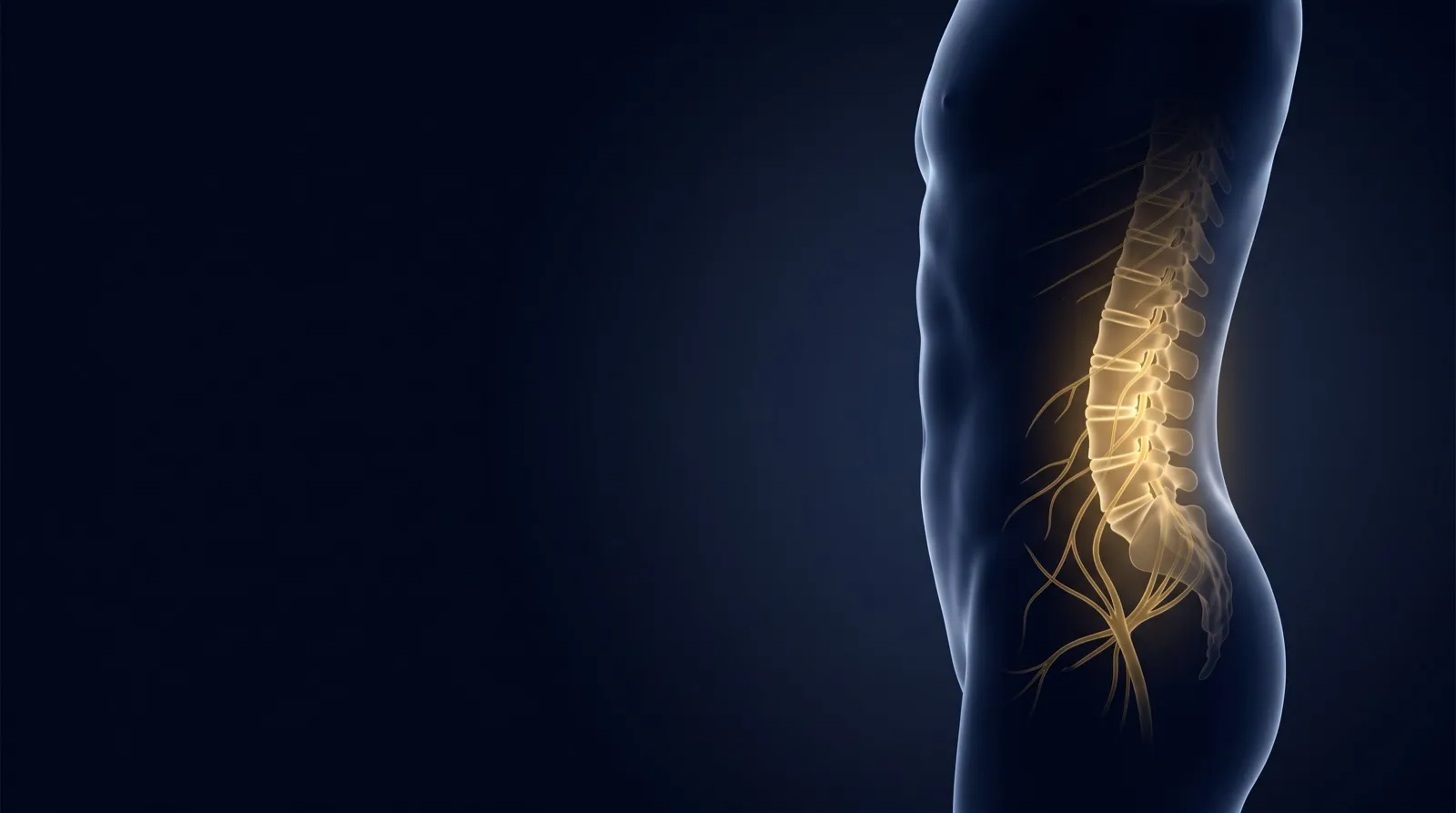
Structural X-ray and spinal analysis identified subluxations at both the cervical and the lumbosacral levels. The cervical involvement mapped to the headache pattern. The lumbosacral involvement lined up with the radiating leg pain and the degenerative change in the low back. And because the lumbar and sacral nerve roots supply the pelvis, the same region of interference can relate to how the pelvis functions, which is where the dysmenorrhea enters the picture. One structural category, showing itself in more than one way.
The correction
We corrected the vertebral subluxations the analysis identified, not as four separate interventions for four separate complaints, but as one structural approach directed at the levels involved. The aim was to remove the nerve interference at each root and give the body's own ability to regulate and heal a clearer path to work through. As always, the plan followed her spine and how long these patterns had been in place, not a fixed schedule.
Four complaints, two levels, one approach. The cervical correction was directed at the headache pattern; the lumbosacral correction, at the radiating pain, the degenerative change, and the nerve supply to the pelvis — where her painful cycles traced. The intent throughout was to restore structure and remove the interference, and let the body do its own work from there.
What happened
For this patient, the headaches, the radiating leg pain, and the painful cycles all eased as the subluxations were corrected, and her low back showed structural improvement on film. Her spine and her results are her own. Long-standing degeneration is not something to promise away — be careful of anyone who guarantees a reversal — but addressing the structural cause gave her body a better environment to function in.
Want to understand what a subluxation is, how it can drive degeneration over time, and what structural correction is aimed at restoring?
Read the complete subluxation guide →