Back pain is a symptom. Subluxation is the cause.
I see more back pain in my office than just about anything else. Most people come to me having already been through the same routine: anti-inflammatories, muscle relaxers, physical therapy, and when none of that holds, talk of injections or surgery. What almost nobody stopped to ask along the way is why those muscles were inflamed and tight to begin with.
When a vertebra in your lower or mid back shifts out of its proper position, it puts interference on the nerves around it. That is a vertebral subluxation. The muscles tighten up to guard it, the discs take uneven pressure, and the whole spine starts moving wrong. That is what is actually producing your pain. Quiet the pain without correcting the subluxation and you have bought yourself a little time, nothing more.
"Low back pain is almost never a muscle problem. The muscles are guarding something structural. Correct the structure and they finally let go."
Lumbar vs. thoracic back pain
Not all back pain comes from the same place. My exam and your X-rays tell me exactly where the subluxation is, and that is what decides how I correct it:
- Lower back (lumbar) subluxation — the most common one I see. Pain across the low back, usually worst in the morning, and it can run into the buttocks and legs when the sciatic nerve gets involved.
- Mid-back (thoracic) subluxation — often a sharp spot between the shoulder blades or around the ribs. In bad cases it can even mimic heart or lung trouble.
- Sacroiliac joint dysfunction — where the spine meets the pelvis. When it is off, you get one-sided low back pain that gets misread as a disc problem all the time.
Disc problems start with subluxation
Herniated discs, bulging discs, degenerative disc disease. These are almost always the long-term result of a subluxation that nobody corrected for years. When the vertebrae sit crooked, the discs between them take uneven pressure, and given enough time that material breaks down, bulges, or herniates.
Correcting the subluxation that drove the disc problem will not undo damage that is already done. What it does is stop the constant mechanical stress that caused it, and take the pressure off the nerve the herniation is sitting on.
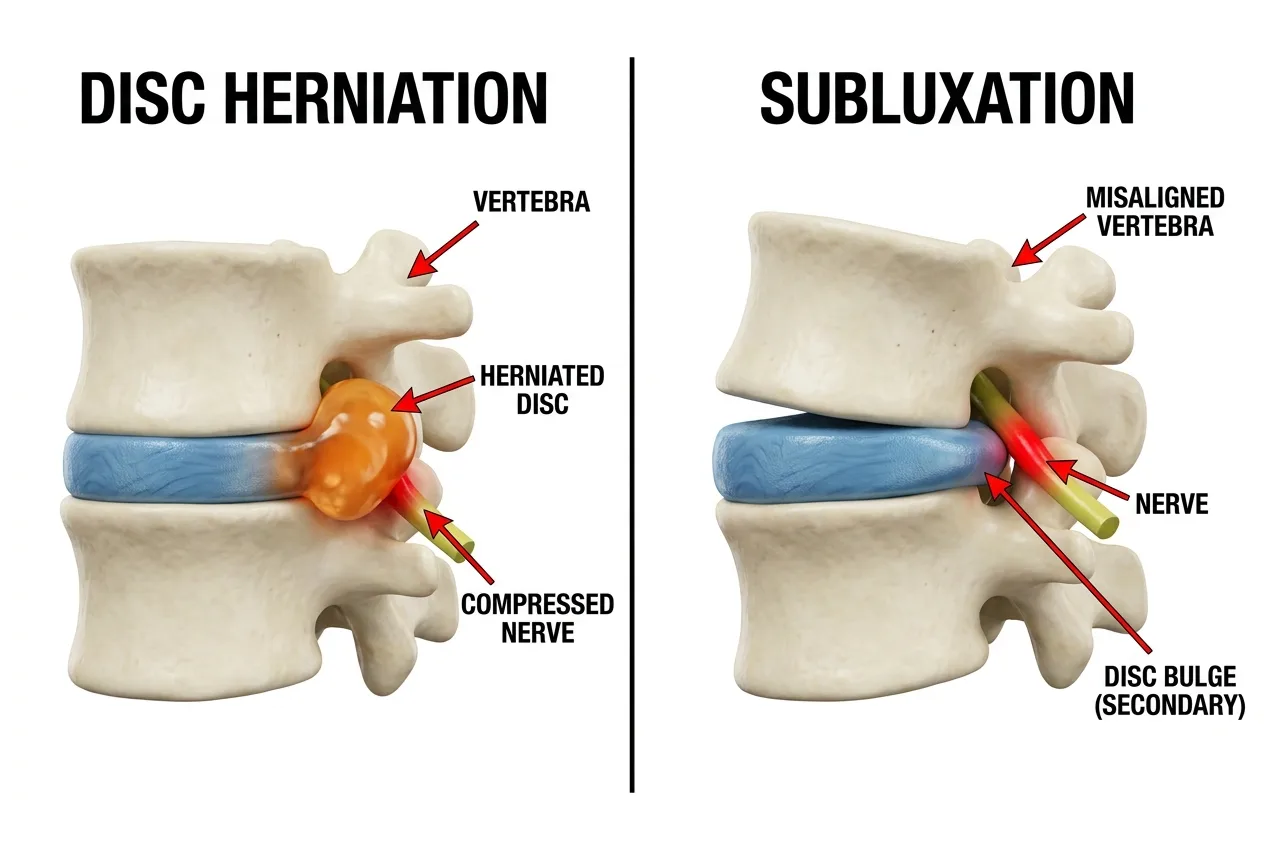
Disc herniation (left) almost always follows subluxation (right). The vertebra shifts first, and the uneven pressure wears the disc down over time.
What to expect at your first visit
Every new patient starts the same way with me: a full history and a structural exam. For back pain I always take lumbar films so I can see exactly where your vertebrae sit and find the subluxation pattern. Your correction plan comes out of those images. It is built for your spine, not pulled off a shelf.
Most of my Royal Palm Beach and Wellington patients with back pain feel a difference in the first few visits. Correcting a subluxation that has been there for years takes longer, and we track it with progress exams and X-rays so you can watch it change.
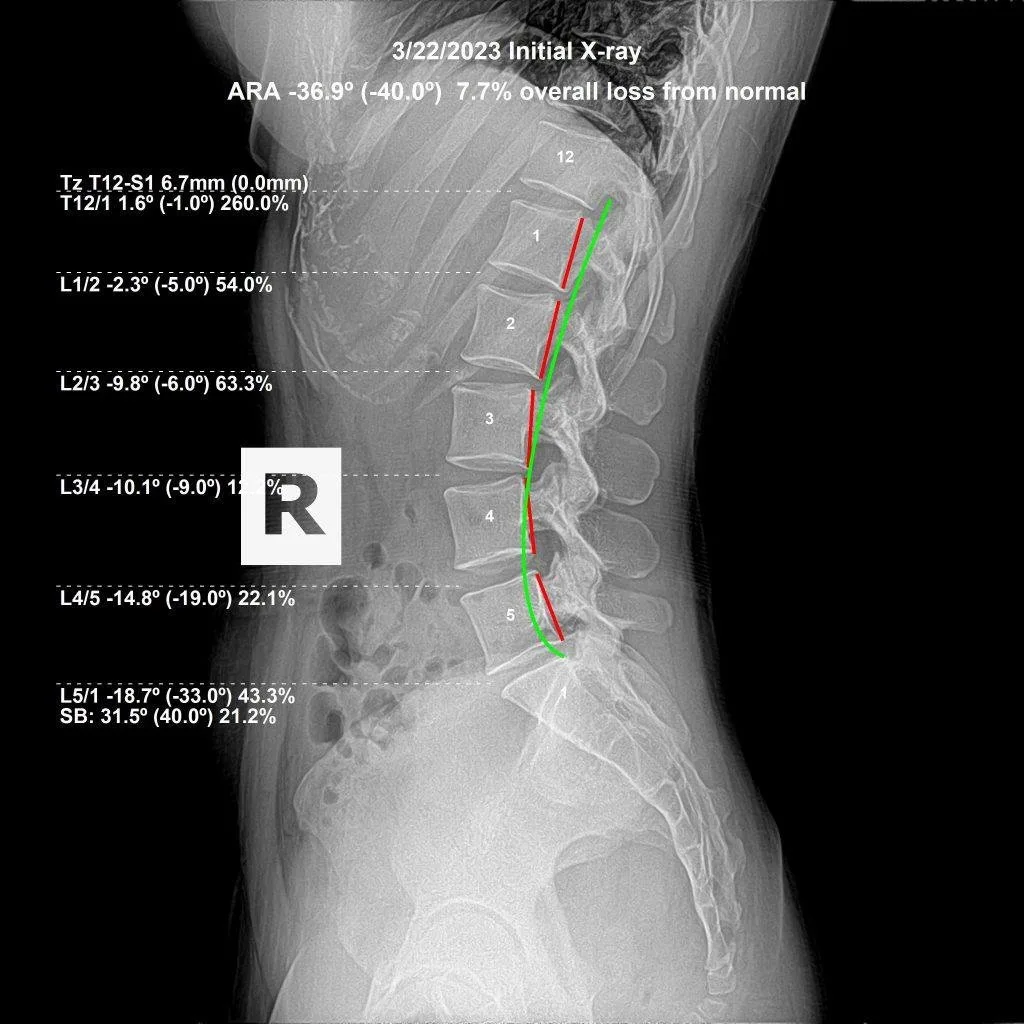
Initial X-ray · 7.7% loss from normal
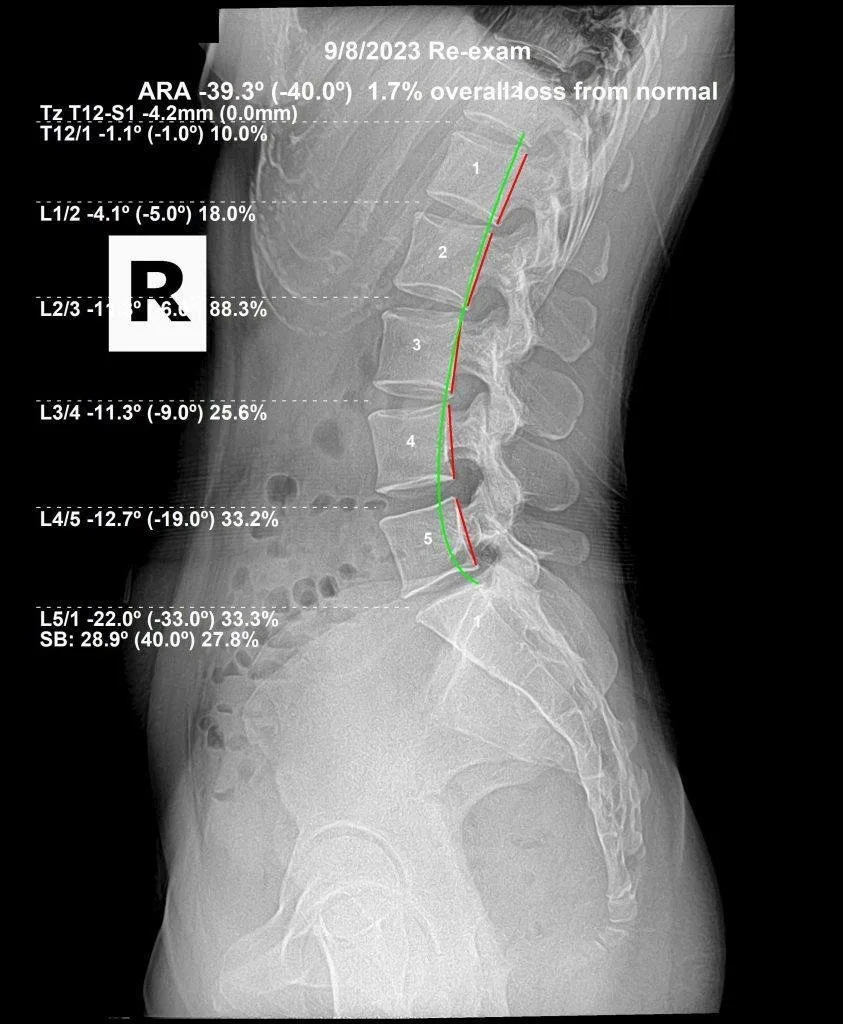
Re-exam · 1.7% loss from normal
Actual patient X-rays — lumbar subluxation correction tracked with before and after imaging at Rochet Family Chiropractic.
Why back pain keeps coming back
The most common reason back pain comes back is simple: the subluxation was never corrected, only the symptom was managed. Anti-inflammatories, muscle relaxers, even physical therapy can turn the pain down without moving the vertebra that is causing it. The medication wears off, the therapy ends, and that same crooked vertebra keeps pressing on the same nerves and discs. The pain comes back because the cause never left.
Subluxation-based correction works differently. The goal is to put the vertebra back where it belongs, confirmed on before and after X-rays, so the nerve irritation, the muscle guarding, and the disc stress are gone at the source. Once the structure is corrected and held, your body no longer has a reason to keep producing that pain.
Why I recommend maintenance care: think of it like the retainer after braces. A check and an adjustment now and then holds the correction in place so the old subluxation pattern does not creep back under the stress of everyday life.
Frequently asked questions
How is subluxation-based care different from other back pain treatments?
Most back pain treatment goes after the pain itself, the symptom. I go after the vertebra that is out of position and creating the nerve interference, and I correct the structure. That is the whole difference: cause versus symptom. I use X-rays to find the exact subluxation, give specific corrective adjustments, and track the structure changing over time.
Do I need X-rays before my first adjustment?
For most back pain cases, yes. X-rays let me see exactly where your vertebrae sit, spot the subluxation pattern, rule out anything that would change my approach, and build a correction plan for your spine. Adjusting without that picture is guessing, and I will not do it. We take the films right here and go over them with you before any care starts.
How long does correction take for back pain?
It depends on how long the subluxation has been there and how far off the structure is. A recent one corrects faster than a pattern you have carried for years. Most people feel a functional difference within weeks. The measurable structural change, the kind we confirm on progress X-rays, usually comes over months of consistent care. Once I have seen your first films I can give you a real timeline.